01 / 06 — Overview
ACEBRA — IV Encuentro
From event identity to digital experience: organizing an international scientific encounter
Client
ACEBRA
Year
2026
Duration
2 weeks
Type
Product Design
Role
UX/UI Designer & Web Designer
Scope
UX Design · UI Design · Web Development
Duration
2 weeks
02 / 06 — Context
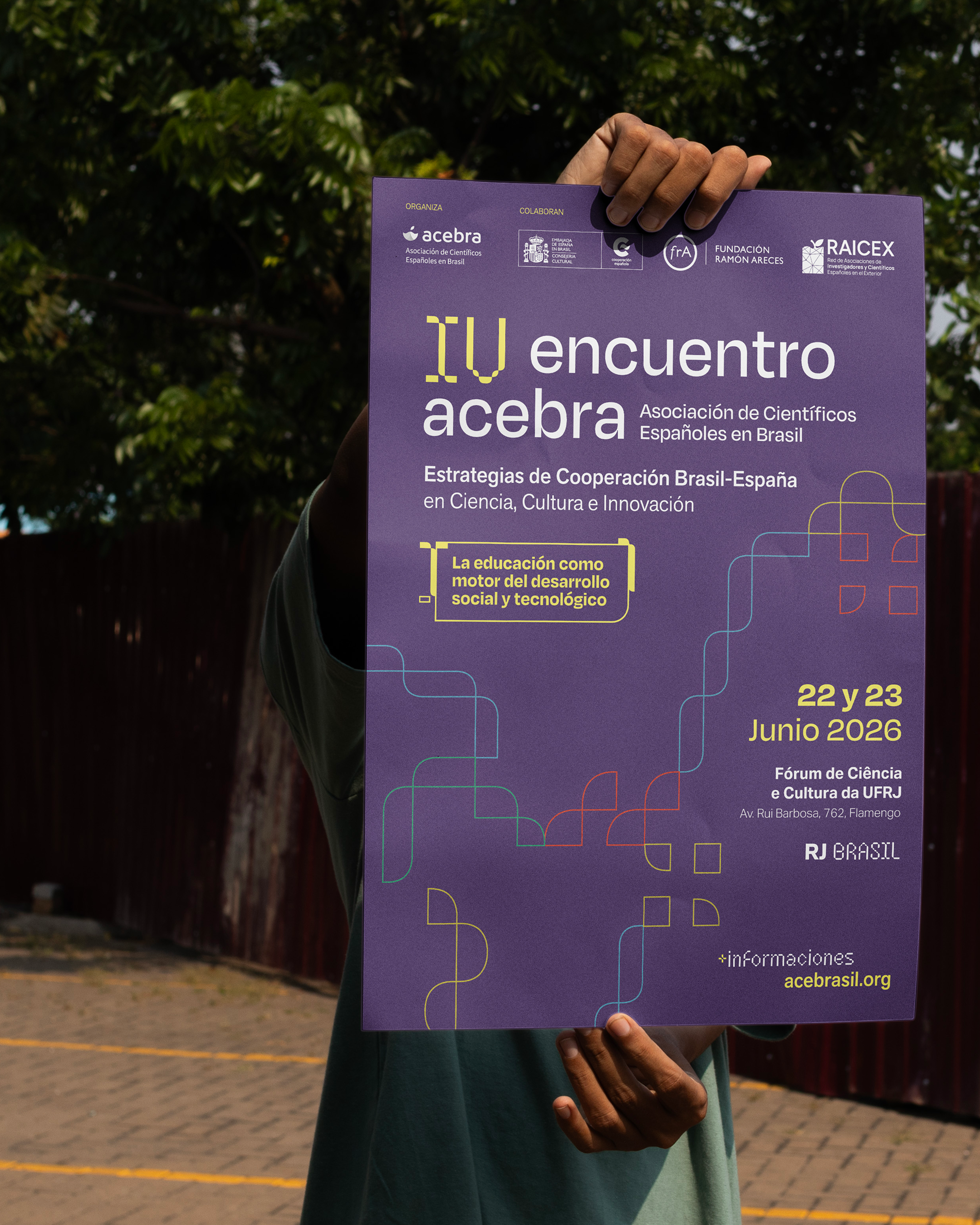
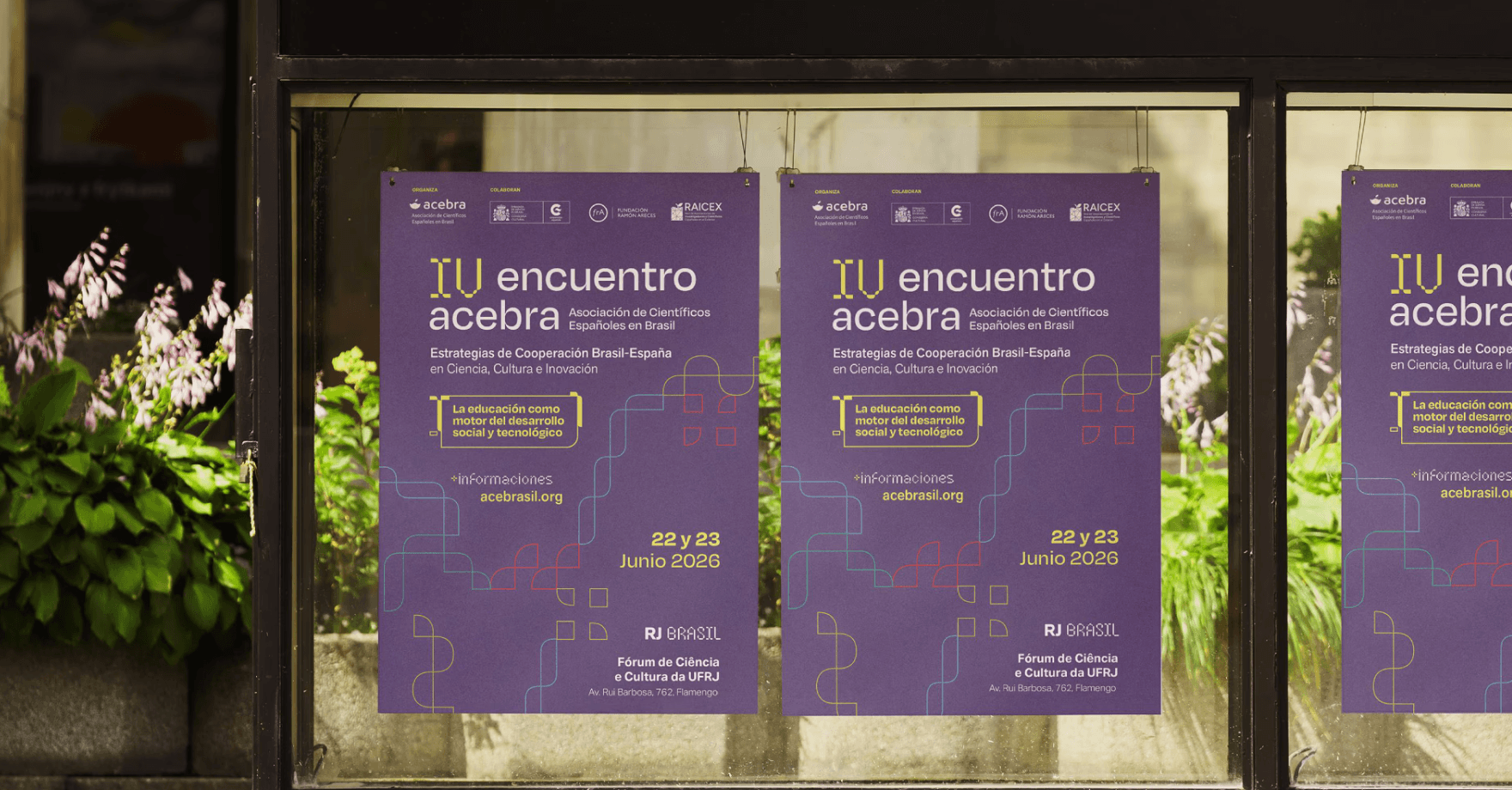
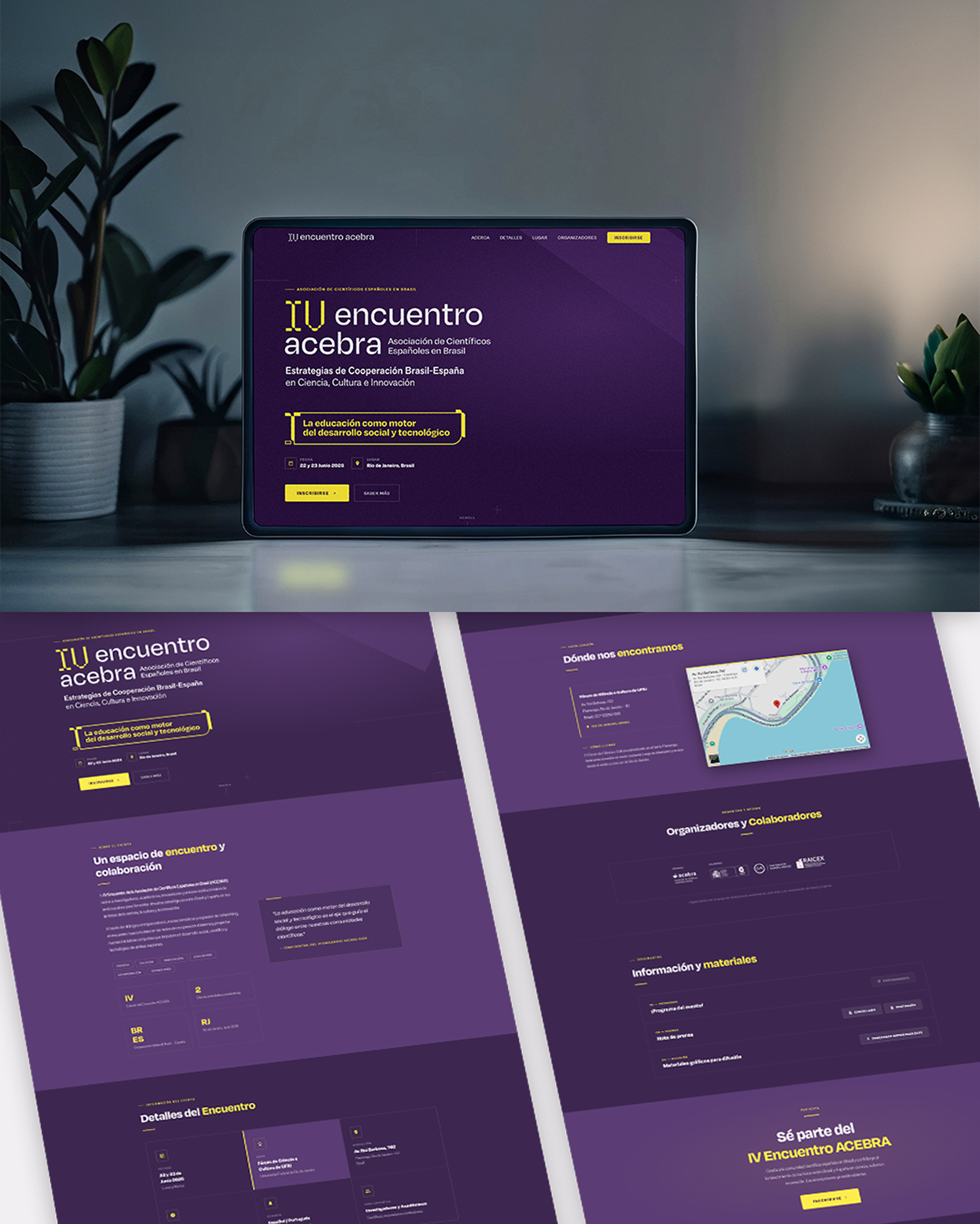
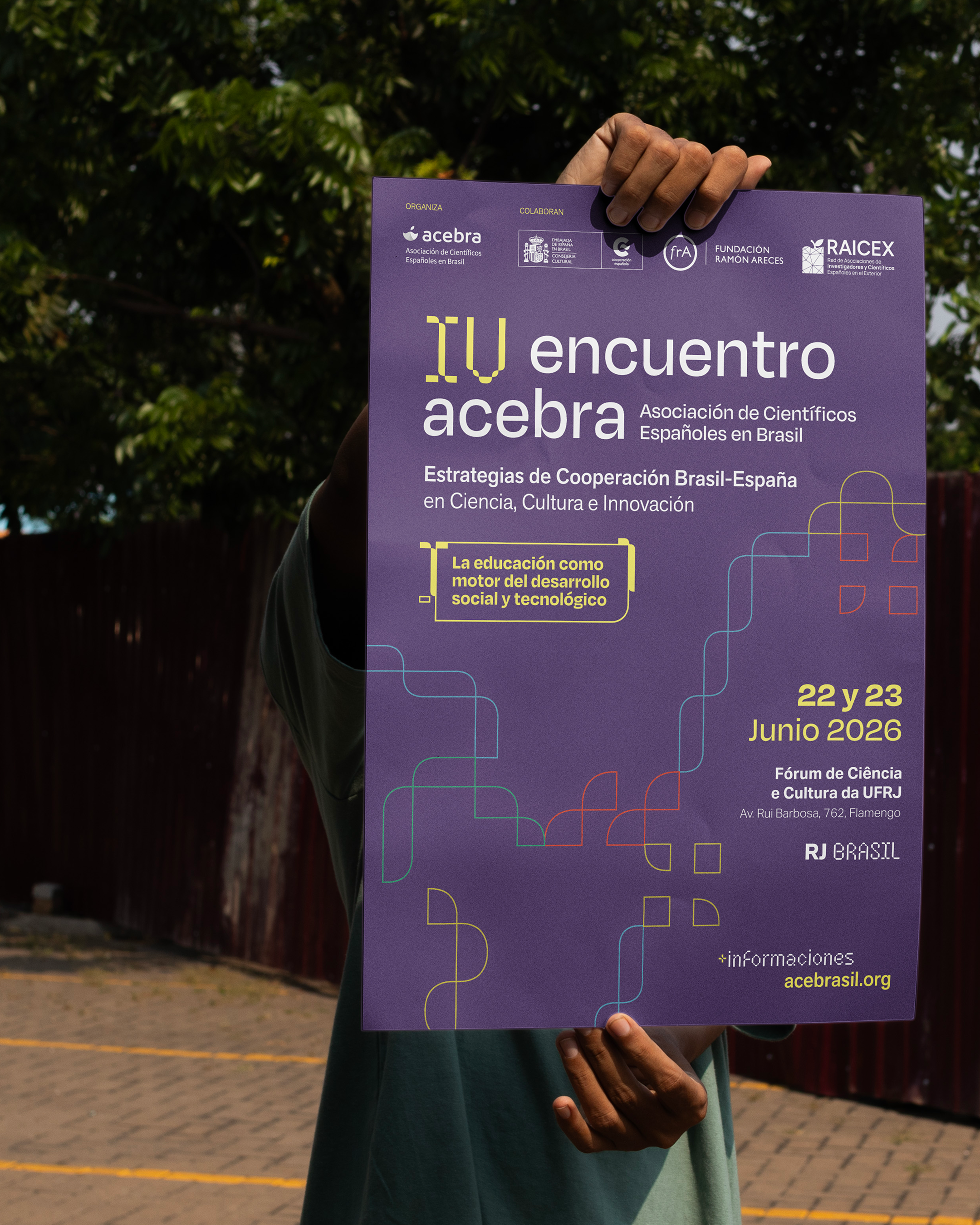
The IV Encuentro of the Asociación de Científicos Españoles en Brasil — ACEBRA — was created to strengthen connections between Brazil and Spain across science, culture, education and innovation. Held in Rio de Janeiro, the event brought together researchers, academics, institutions and innovation professionals for two days of talks, panel discussions and networking. I joined the project to organize the event's information and translate its visual identity into a clear and engaging digital experience, helping participants understand the proposal and access the program, location and registration.
03 / 06 — Challenge
The main challenge was organizing a large amount of institutional and practical content into a single-page experience without making the website feel dense or difficult to navigate. The page also needed to preserve the expressive character of the event's visual identity while maintaining readability, credibility and clear access to registration. With a one-week delivery timeline, the project required rapid prioritization and close collaboration between content, design and development.
04 / 06 — Research
I began by reviewing the available content, the event's visual identity and the main communication needs before and during the encounter. I mapped the information participants would need to make a decision and plan their attendance — including the event's purpose, dates, location, format, organizers, program and registration. I also analyzed scientific and institutional event websites to understand how similar initiatives balanced credibility, visual expression and practical information. This process showed that the website needed to work as more than a promotional page — it had to become the event's central source of information for an international audience.
05 / 06 — Solution
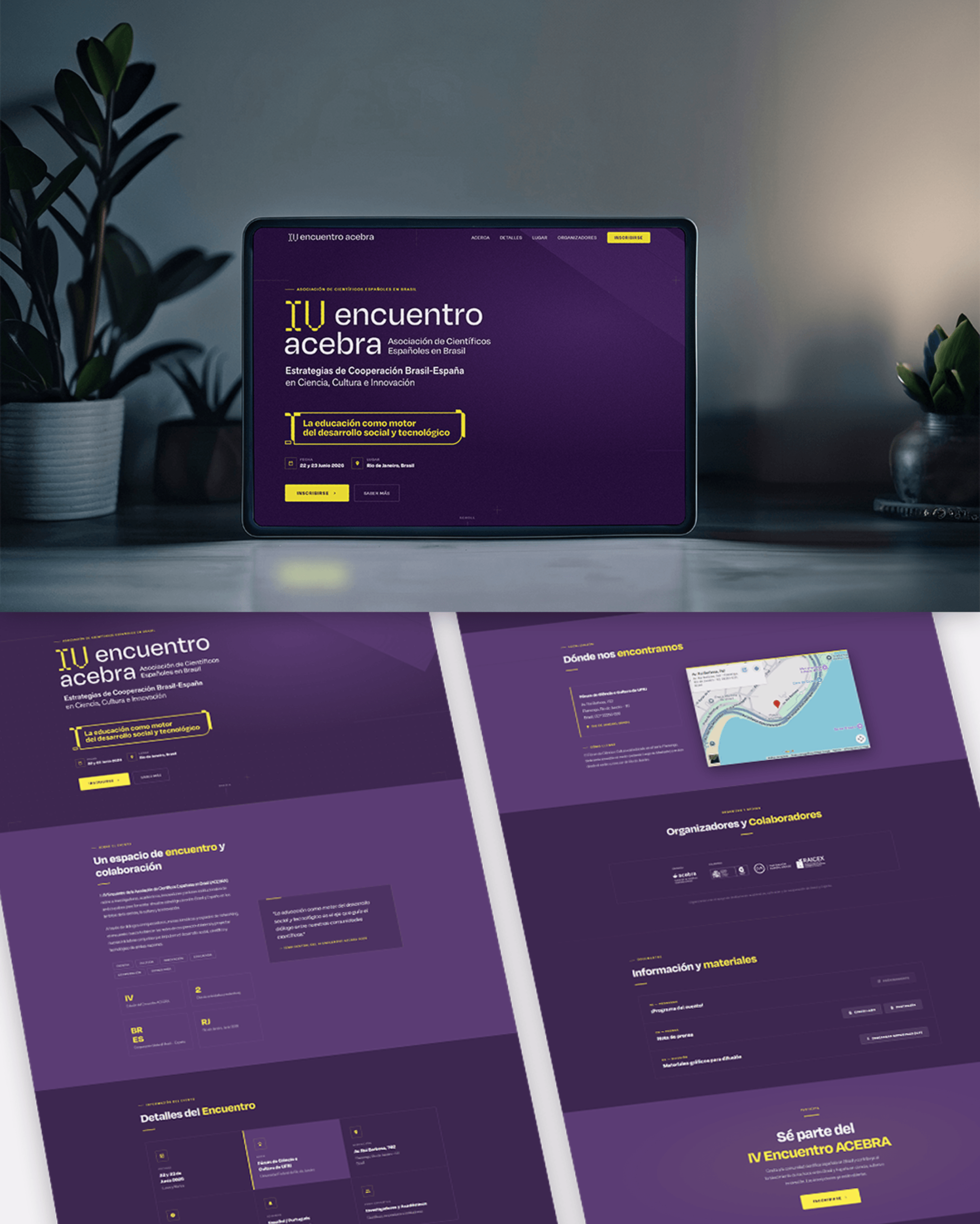
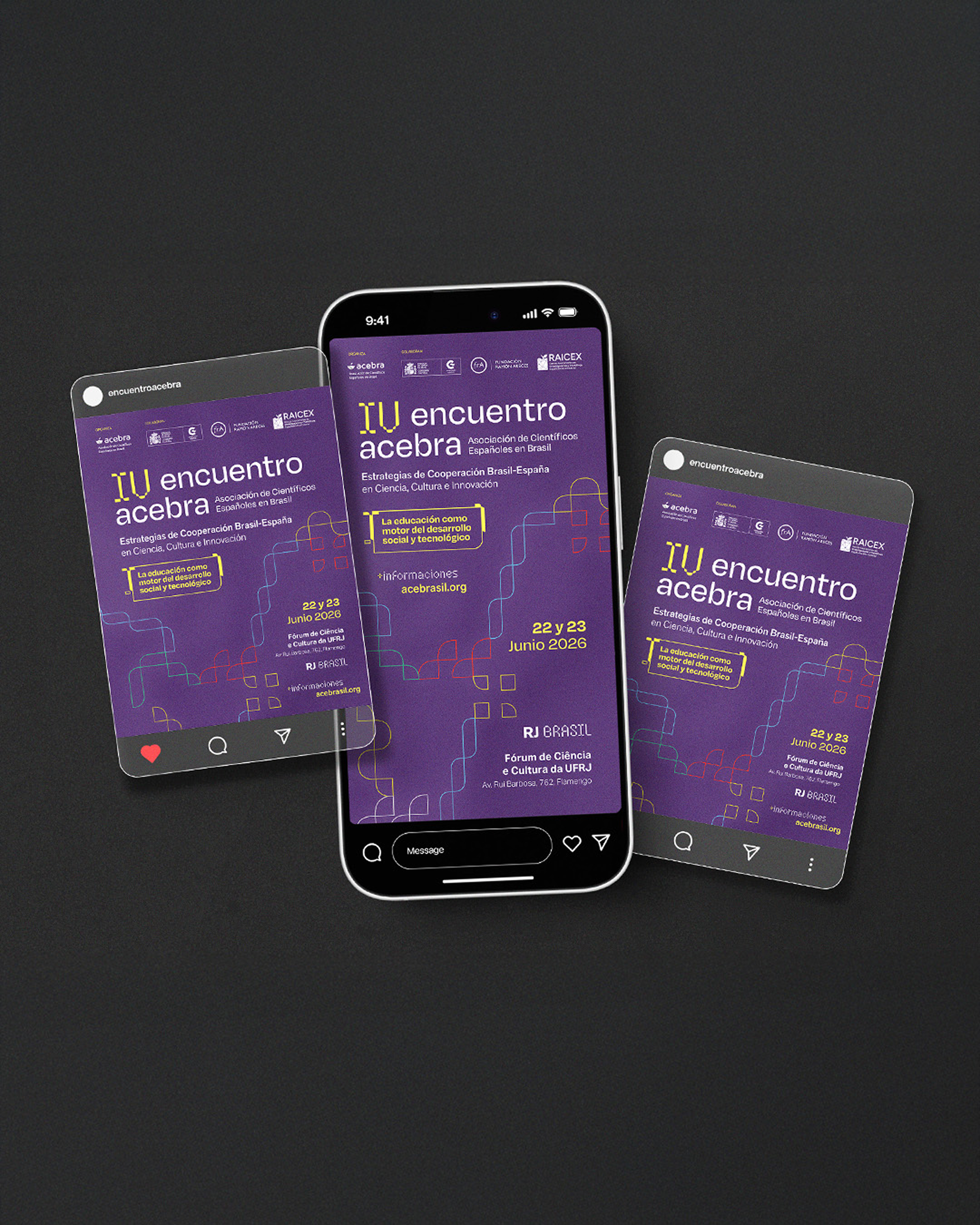
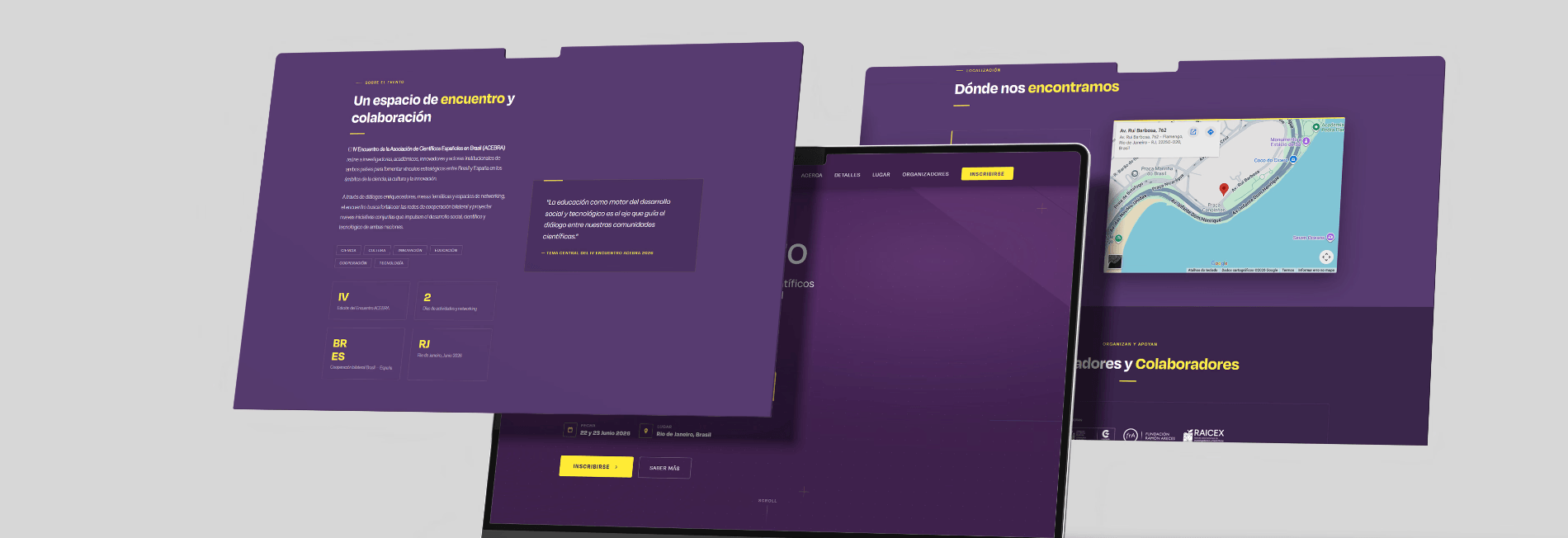
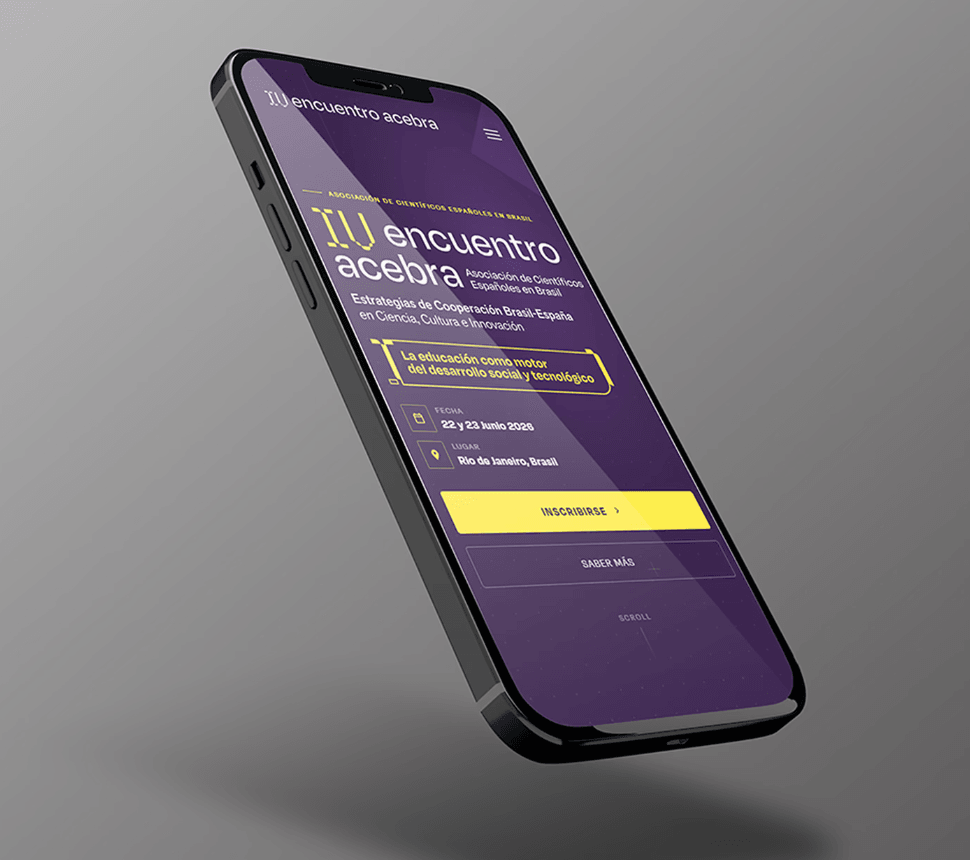
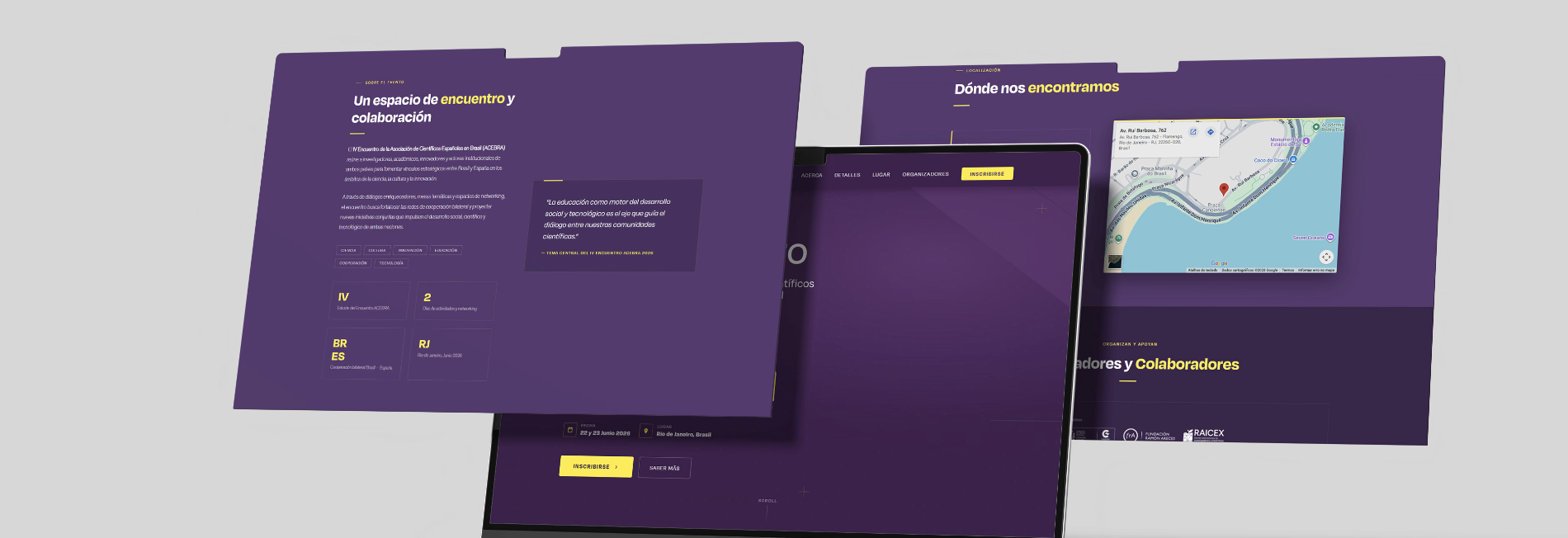
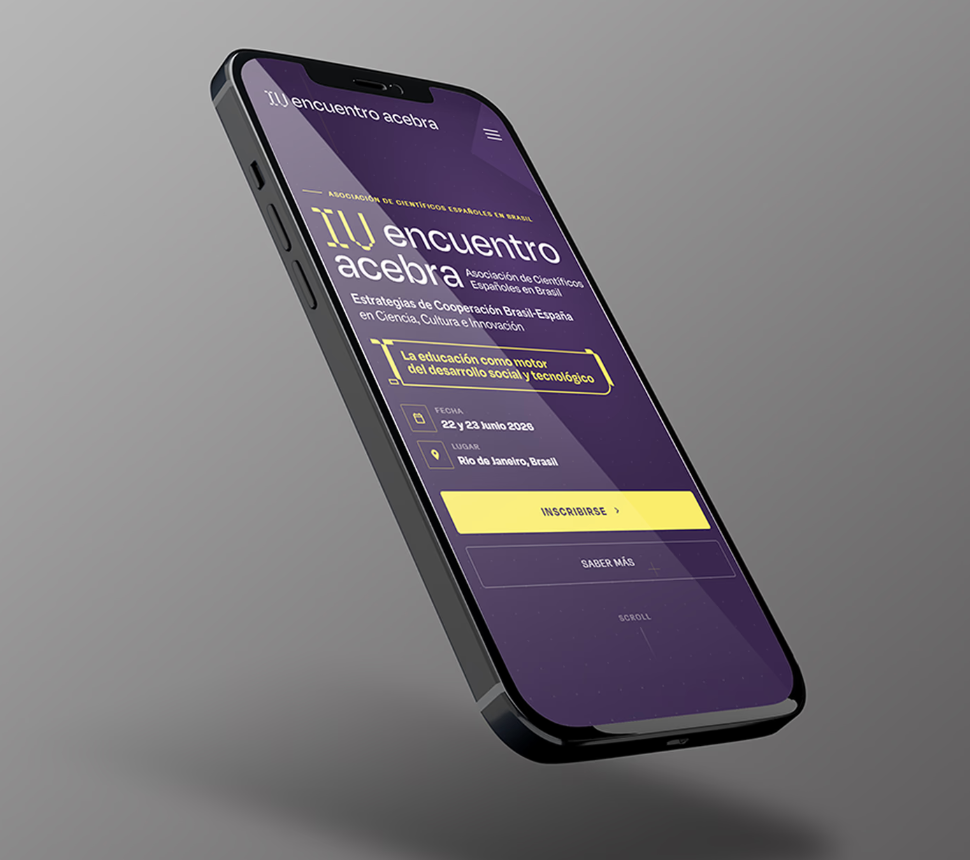
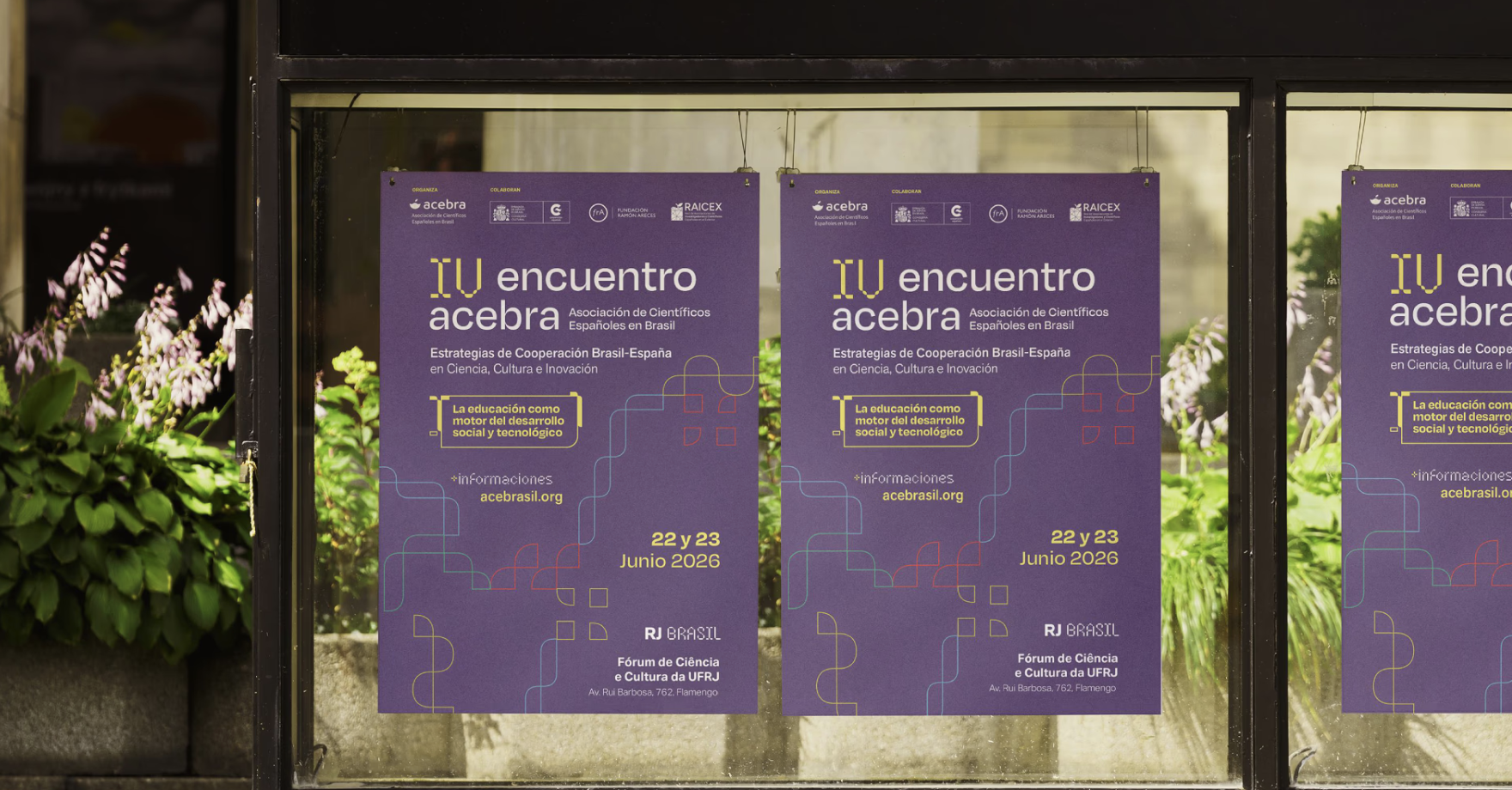
I structured the experience around four main areas: information hierarchy (organizing content according to the questions participants would naturally have, from the event's purpose to practical details); narrative navigation (a continuous landing page guiding visitors while allowing important information to be identified quickly); calls to action (registration links positioned throughout the experience); and a responsive experience adapted for different screen sizes. I collaborated with Julia Sprioli to connect the UX structure to the interface and implementation, working from the visual identity created by Taís Cardoso.
06 / 06 — Results
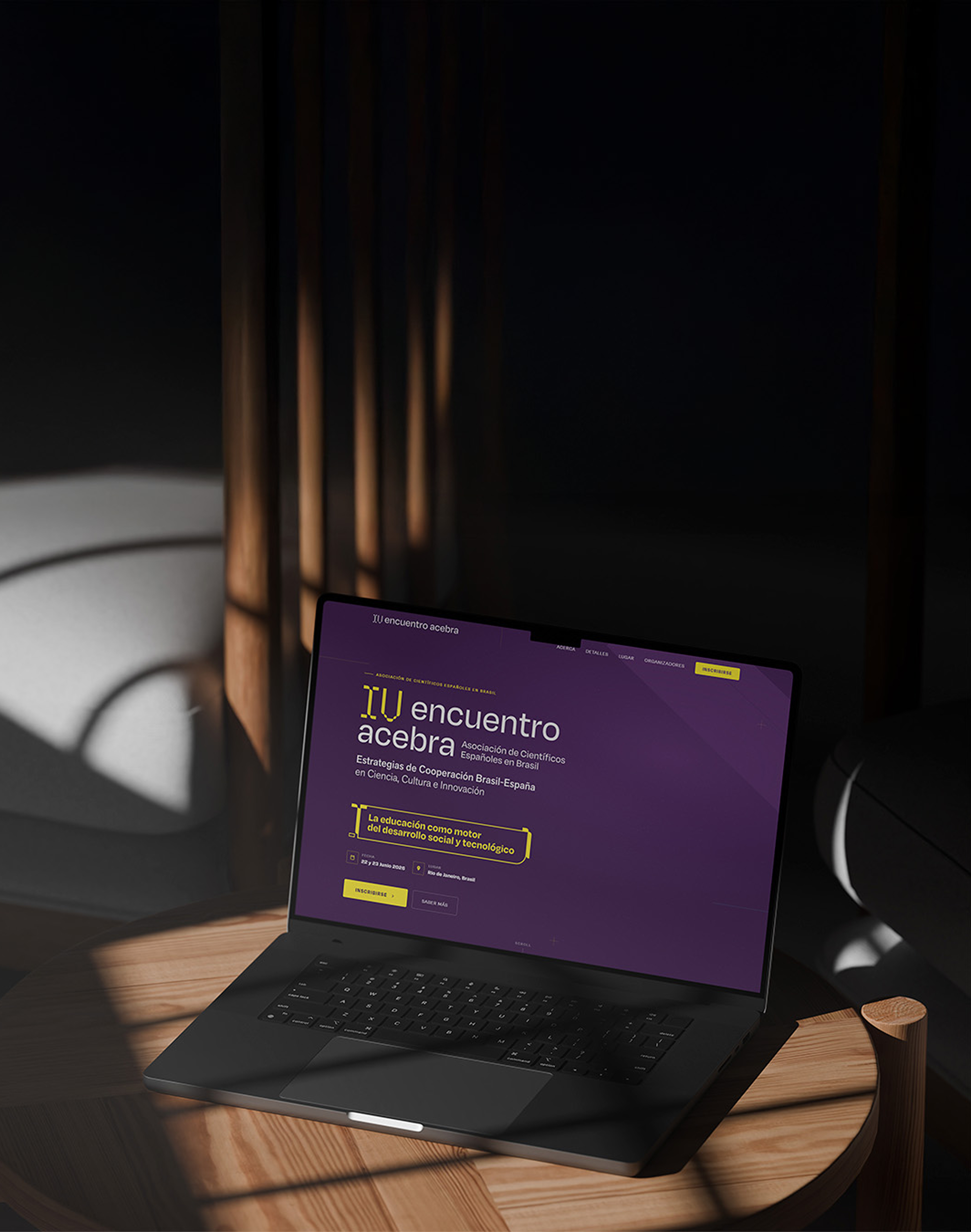
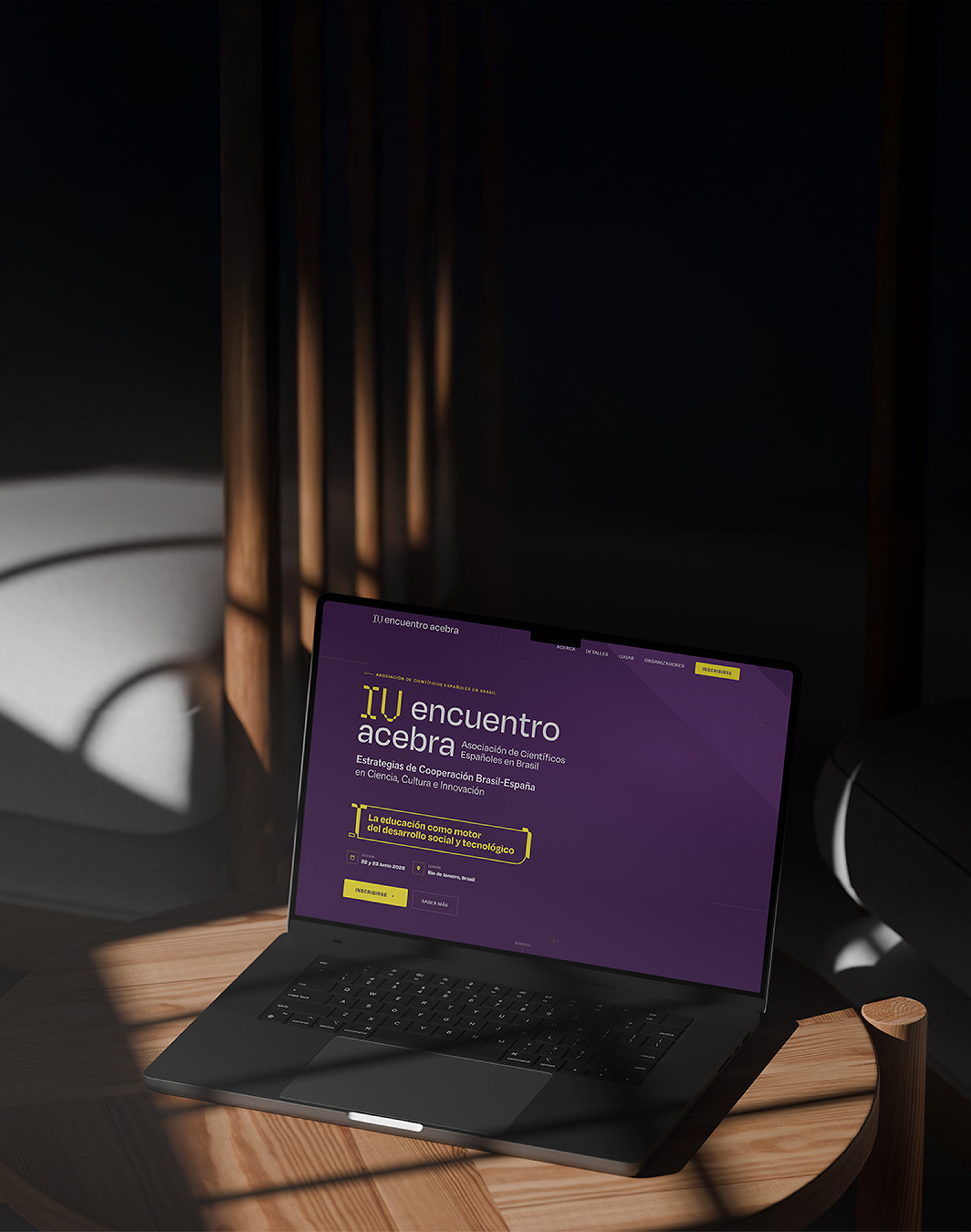
The final landing page centralized the main information about the IV Encuentro ACEBRA and established a clear digital entry point for the event. Participants could understand the proposal, explore the program, locate practical information and access registration within a single responsive experience. The project demonstrated my ability to organize complex institutional content, make fast product decisions and deliver a functional digital experience within a short timeline.
01 / 06 — Overview
ACEBRA — IV Encuentro
From event identity to digital experience: organizing an international scientific encounter
Client
ACEBRA
Year
2026
Duration
2 weeks
Type
Product Design
Role
UX/UI Designer & Web Designer
Scope
UX Design · UI Design · Web Development
Duration
2 weeks
02 / 06 — Context
The IV Encuentro of the Asociación de Científicos Españoles en Brasil — ACEBRA — was created to strengthen connections between Brazil and Spain across science, culture, education and innovation. Held in Rio de Janeiro, the event brought together researchers, academics, institutions and innovation professionals for two days of talks, panel discussions and networking. I joined the project to organize the event's information and translate its visual identity into a clear and engaging digital experience, helping participants understand the proposal and access the program, location and registration.
03 / 06 — Challenge
The main challenge was organizing a large amount of institutional and practical content into a single-page experience without making the website feel dense or difficult to navigate. The page also needed to preserve the expressive character of the event's visual identity while maintaining readability, credibility and clear access to registration. With a one-week delivery timeline, the project required rapid prioritization and close collaboration between content, design and development.
04 / 06 — Research
I began by reviewing the available content, the event's visual identity and the main communication needs before and during the encounter. I mapped the information participants would need to make a decision and plan their attendance — including the event's purpose, dates, location, format, organizers, program and registration. I also analyzed scientific and institutional event websites to understand how similar initiatives balanced credibility, visual expression and practical information. This process showed that the website needed to work as more than a promotional page — it had to become the event's central source of information for an international audience.
05 / 06 — Solution
I structured the experience around four main areas: information hierarchy (organizing content according to the questions participants would naturally have, from the event's purpose to practical details); narrative navigation (a continuous landing page guiding visitors while allowing important information to be identified quickly); calls to action (registration links positioned throughout the experience); and a responsive experience adapted for different screen sizes. I collaborated with Julia Sprioli to connect the UX structure to the interface and implementation, working from the visual identity created by Taís Cardoso.
06 / 06 — Results
The final landing page centralized the main information about the IV Encuentro ACEBRA and established a clear digital entry point for the event. Participants could understand the proposal, explore the program, locate practical information and access registration within a single responsive experience. The project demonstrated my ability to organize complex institutional content, make fast product decisions and deliver a functional digital experience within a short timeline.