01 / 06 — Overview
MedDrop
From ordering platform to service: balancing autonomy and human support in pharmacy supply
Client
MedDrop
Year
2024
Duration
5 months
Type
Product Design
Role
UX Research & UX/UI Design
Scope
UX Research · UX Design · UI Design · Design System
Team
Design · Research
Duration
5 months
02 / 06 — Context
MedDrop is a pharmaceutical distributor based in the interior of São Paulo, holding a market share of over 80% among small and medium-sized pharmacies. Despite this strong presence, only 17% of its customers used the digital purchasing platform. Looking to expand into new states and reposition its sales representatives toward market growth, MedDrop decided to redesign its online ordering system and transform it into a broader service for purchasing and managing pharmaceutical products. I joined the project to lead the UX research and collaborate on the product experience, investigating why pharmacies still depended heavily on sales representatives and how the platform could offer greater autonomy without losing the human relationships that supported the business.
03 / 06 — Challenge
The main challenge was transforming a transactional ordering platform into a service that could support the broader purchasing routine of pharmacies. Users needed clearer information, immediate feedback and greater control over their orders and financial activity. At the same time, MedDrop needed to reduce operational dependence on sales representatives without weakening the trusted relationships they had built with customers. The experience therefore had to balance automation and personal support while creating a scalable foundation for the company's expansion.
04 / 06 — Research
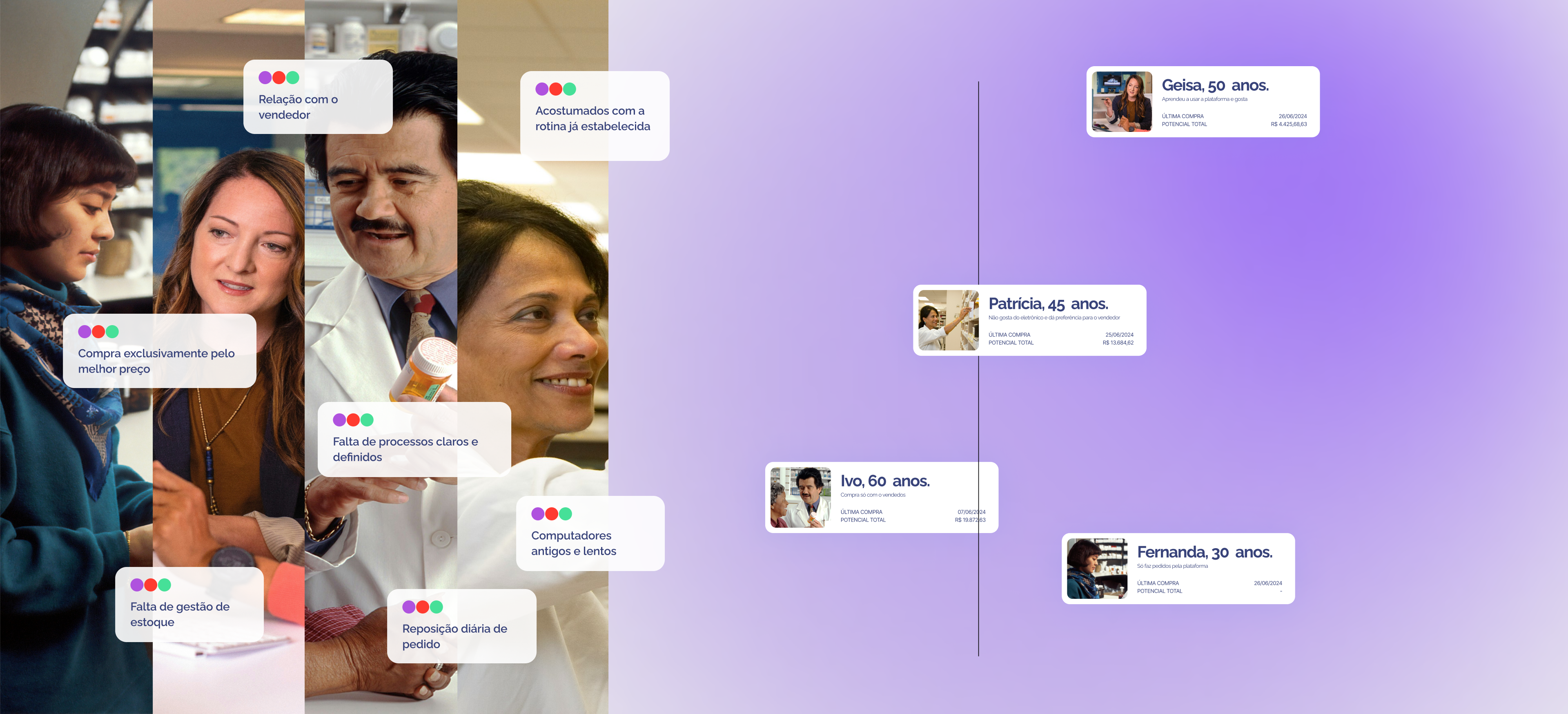
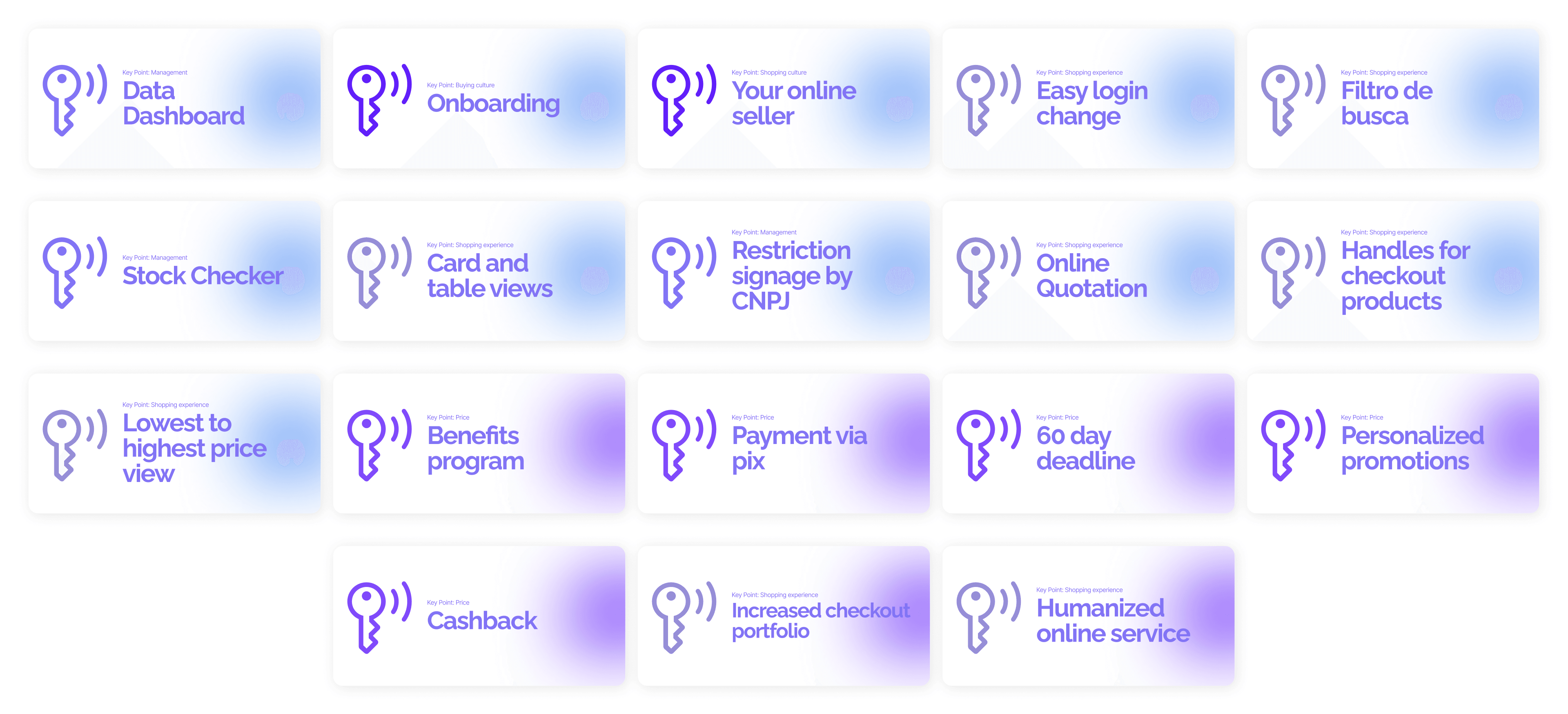
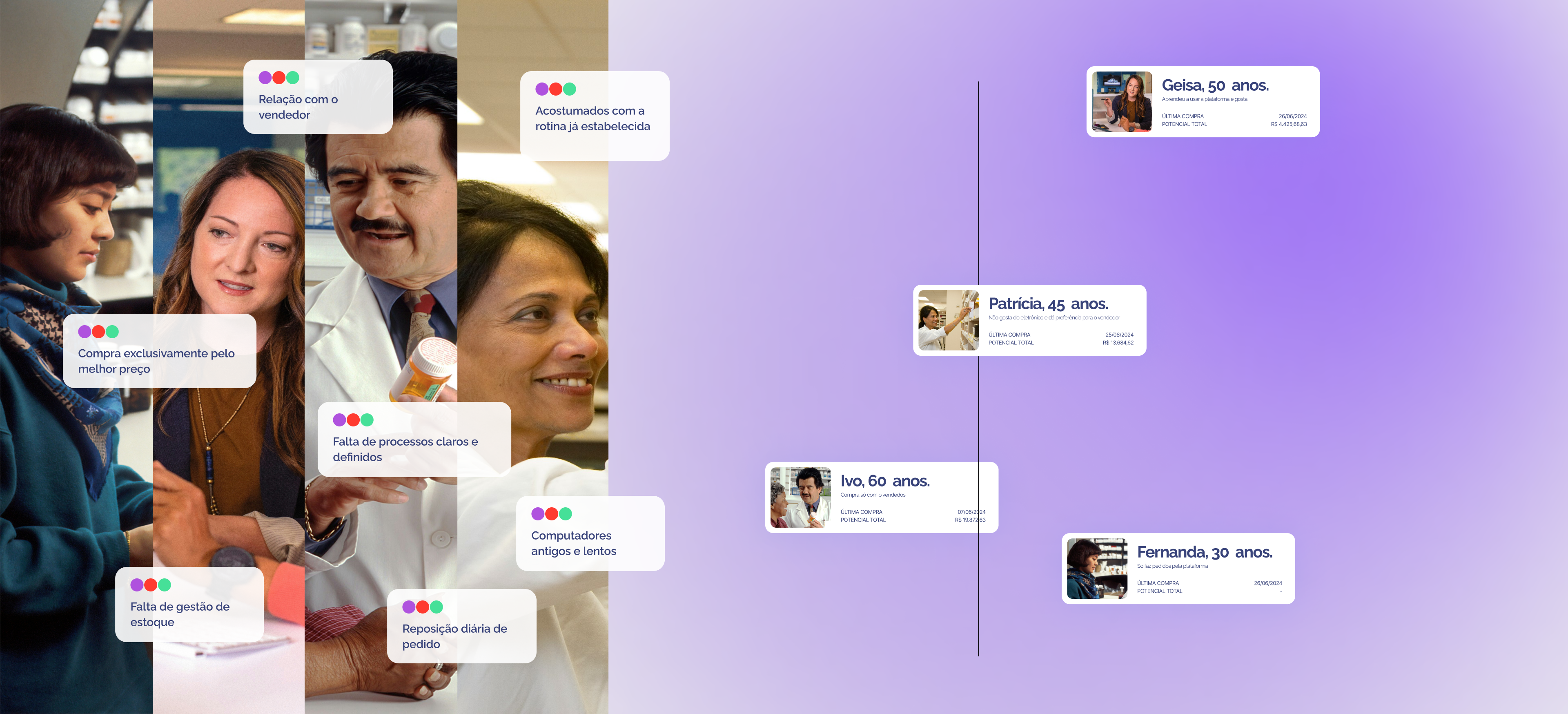
I led the research phase by mapping the existing purchasing workflow, conducting in-depth interviews with users and analyzing quantitative data from the platform. The research revealed friction throughout registration and ordering, limited system feedback and a strong dependence on sales representatives to complete routine tasks and resolve uncertainty. I also identified that pharmacies did not follow a single purchasing pattern — their needs and behaviors changed according to order value, purchasing frequency and their relationship with MedDrop. This showed that increasing digital adoption was not simply a matter of moving more activities online. The product needed to provide clarity and autonomy while preserving human support in the moments where it still created value.
05 / 06 — Solution
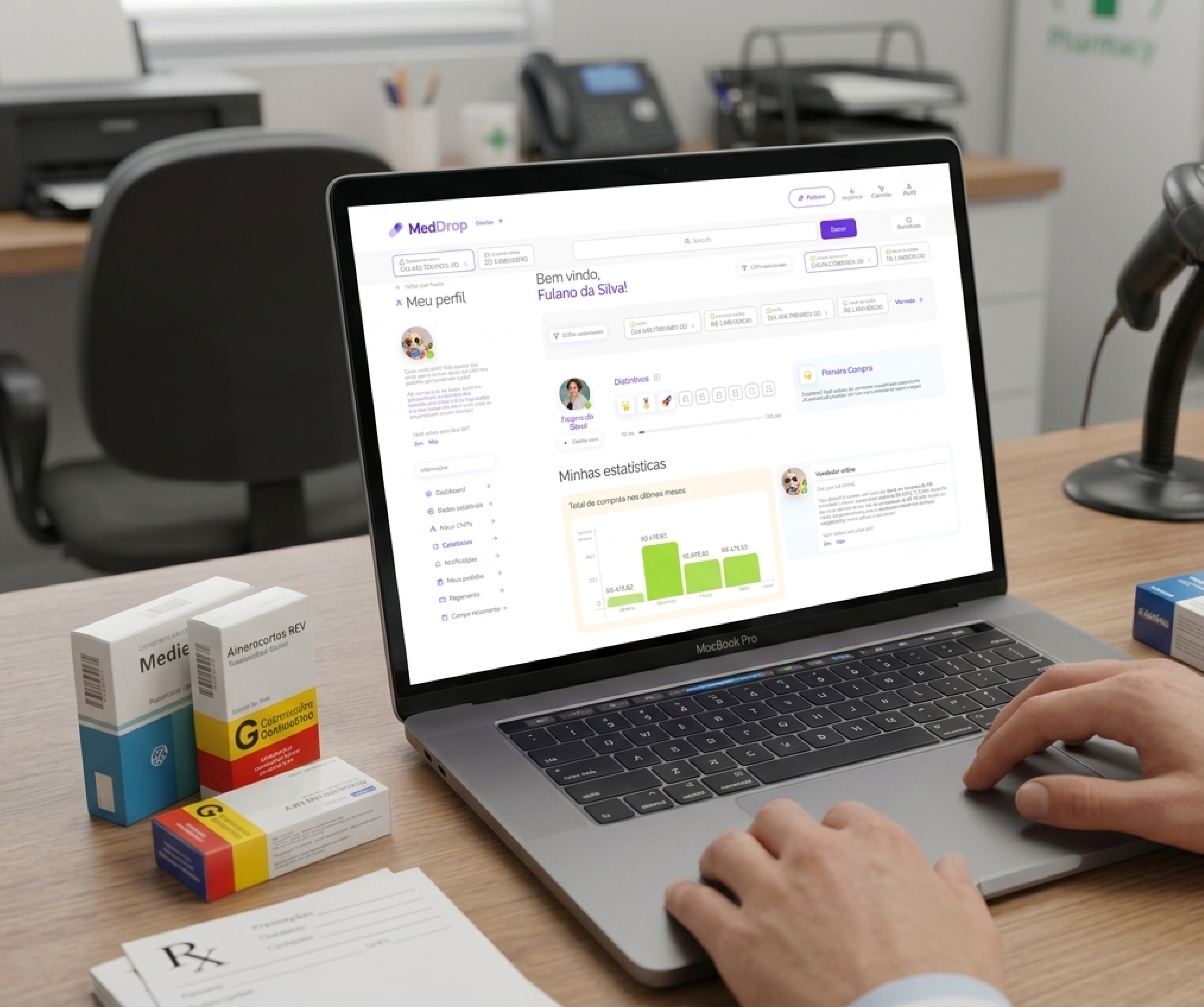
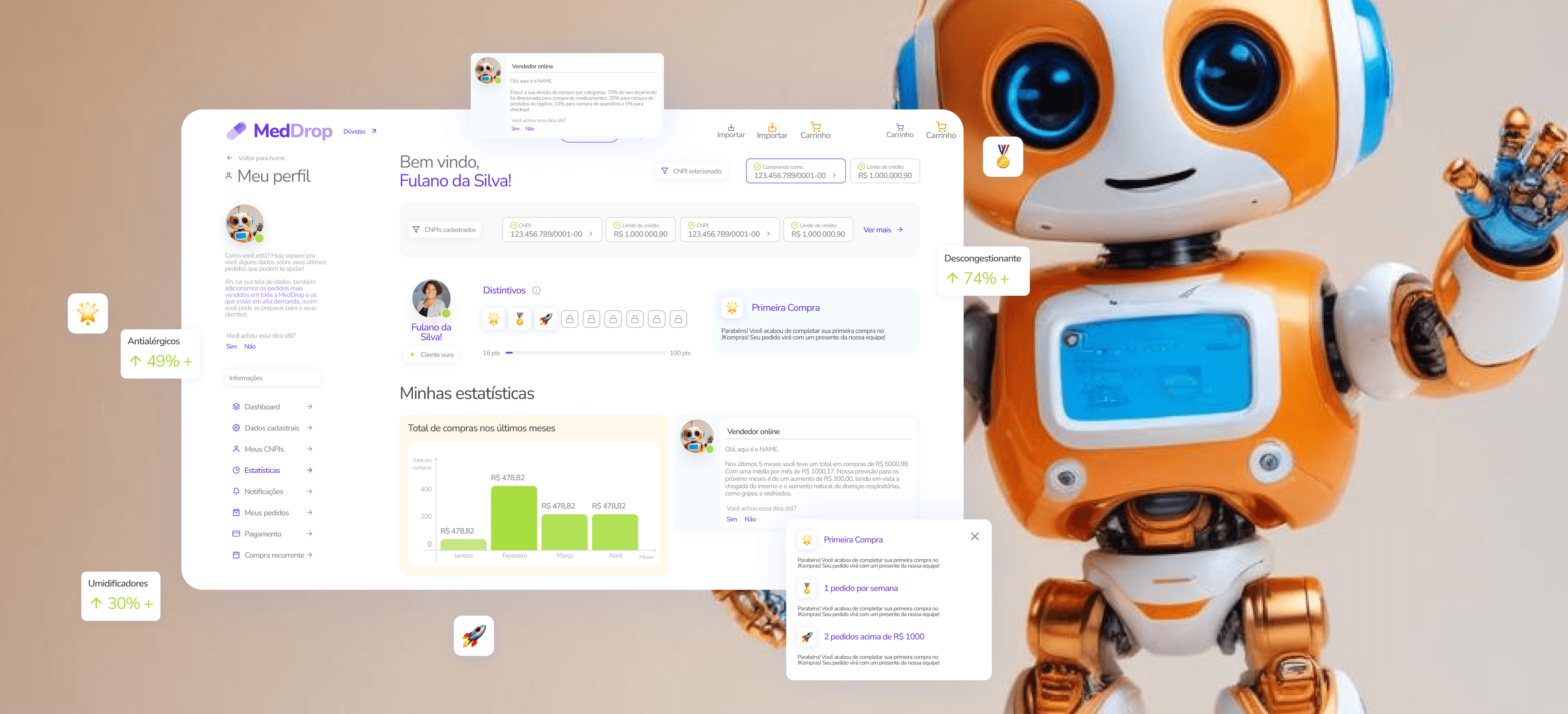
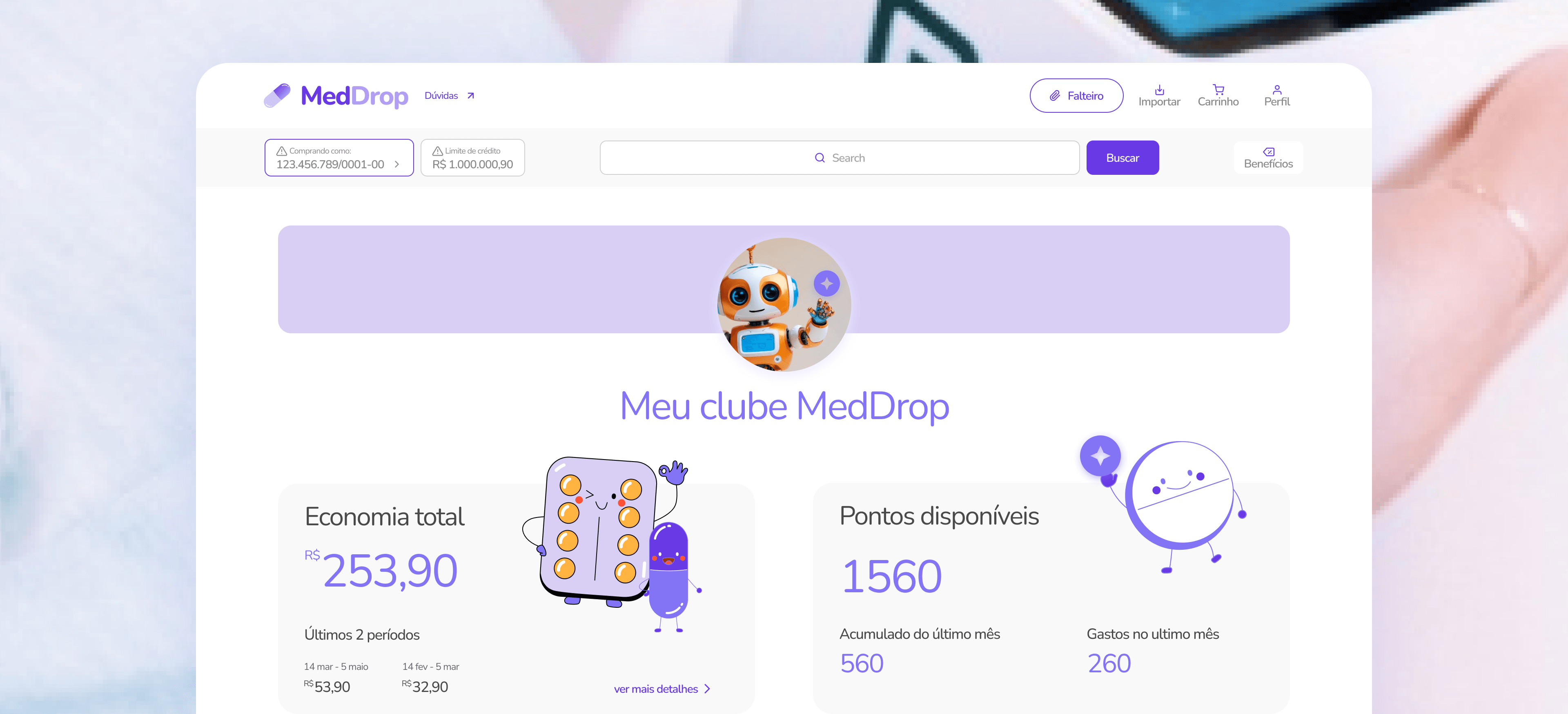
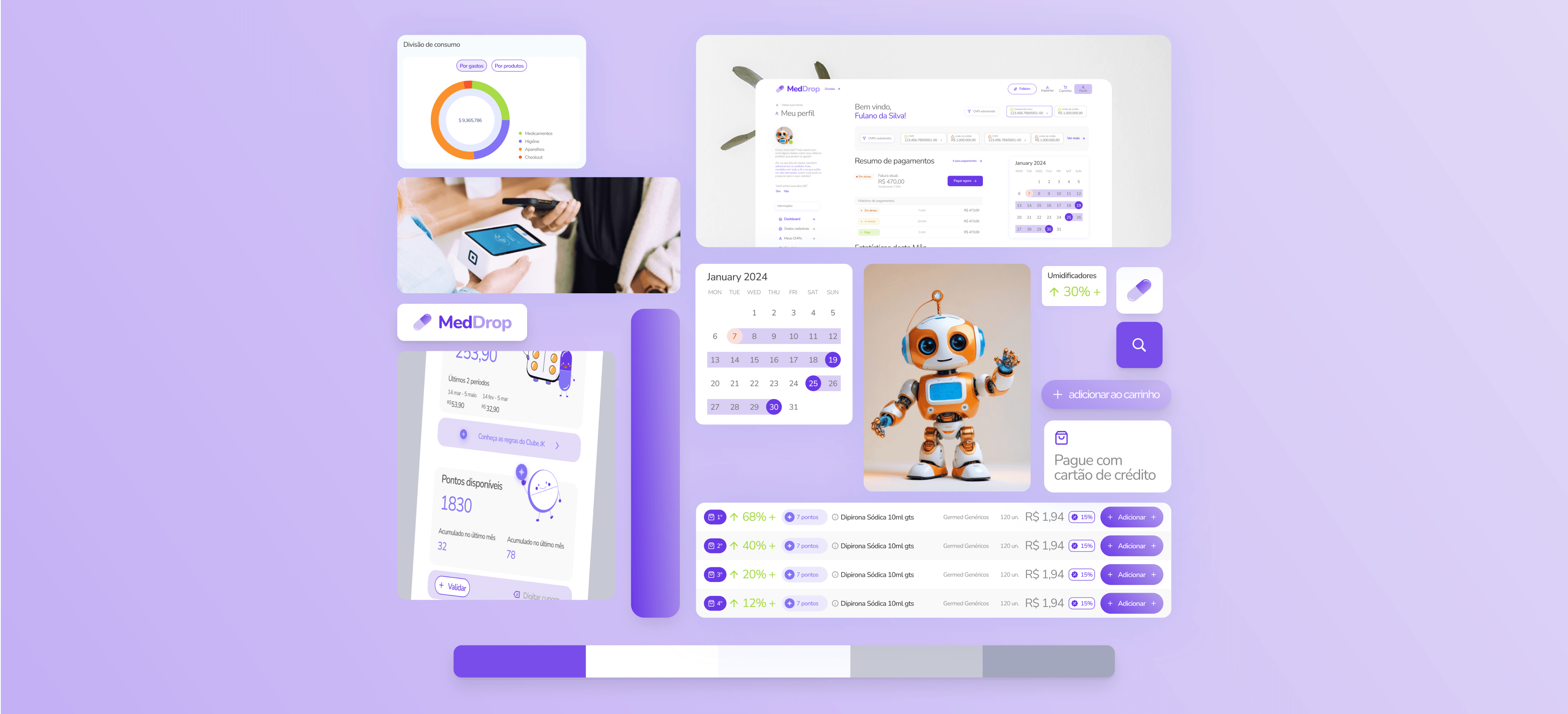
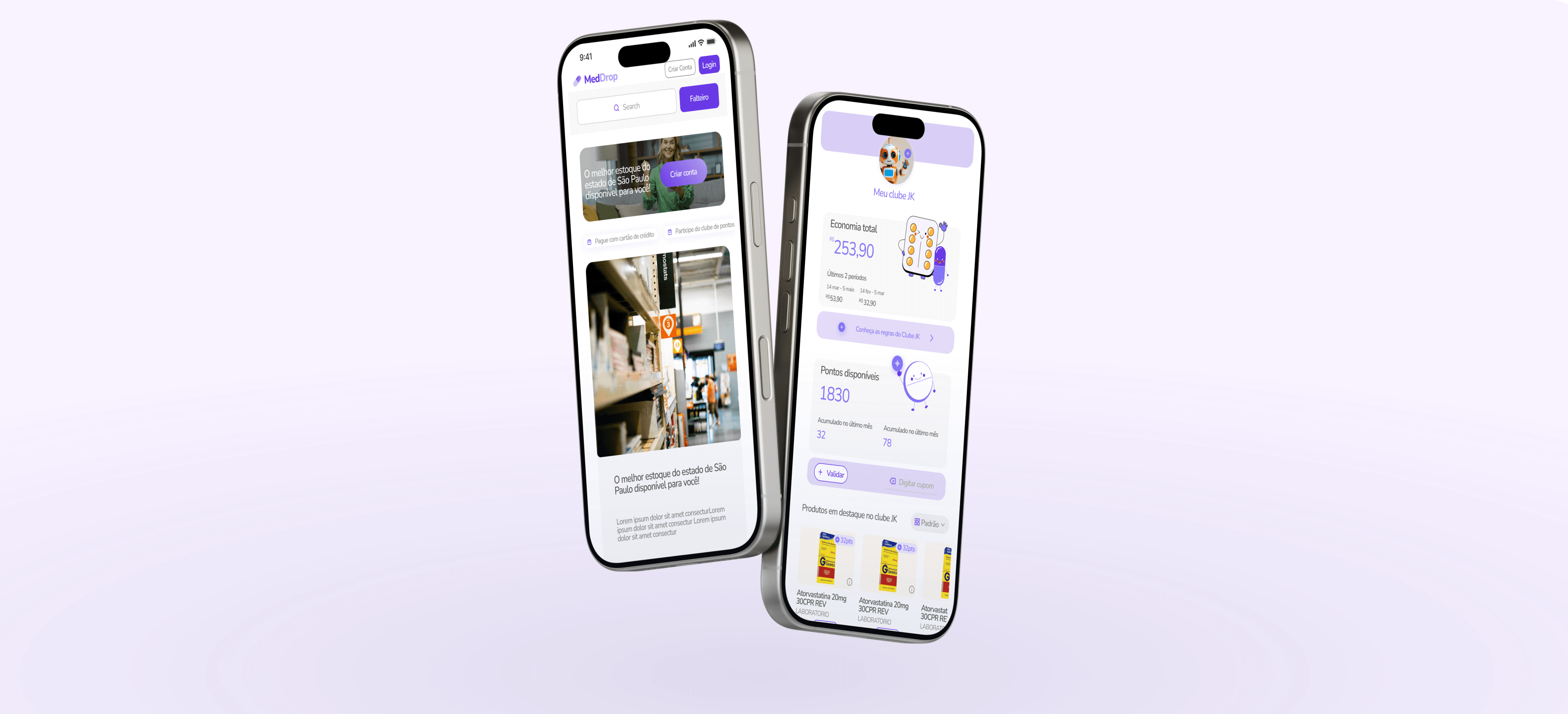
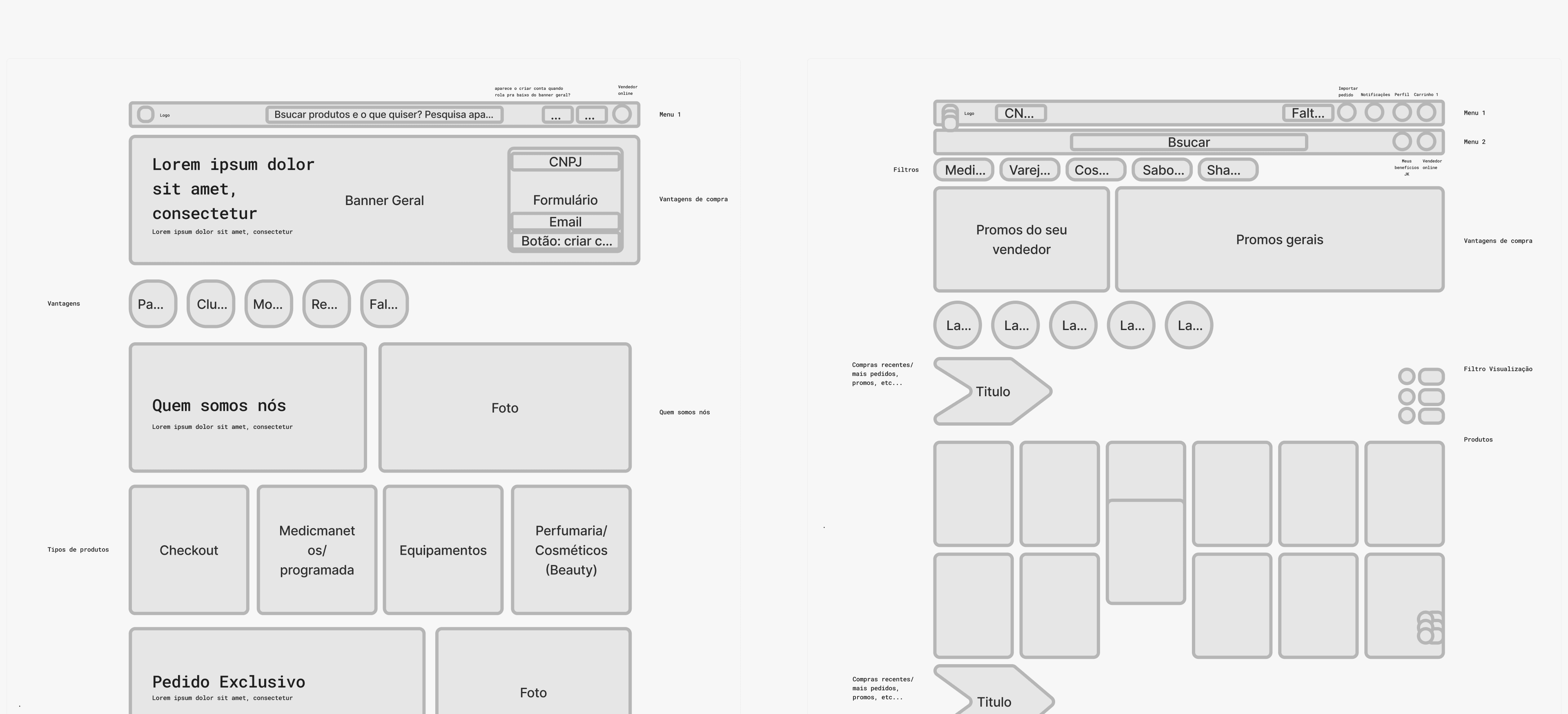
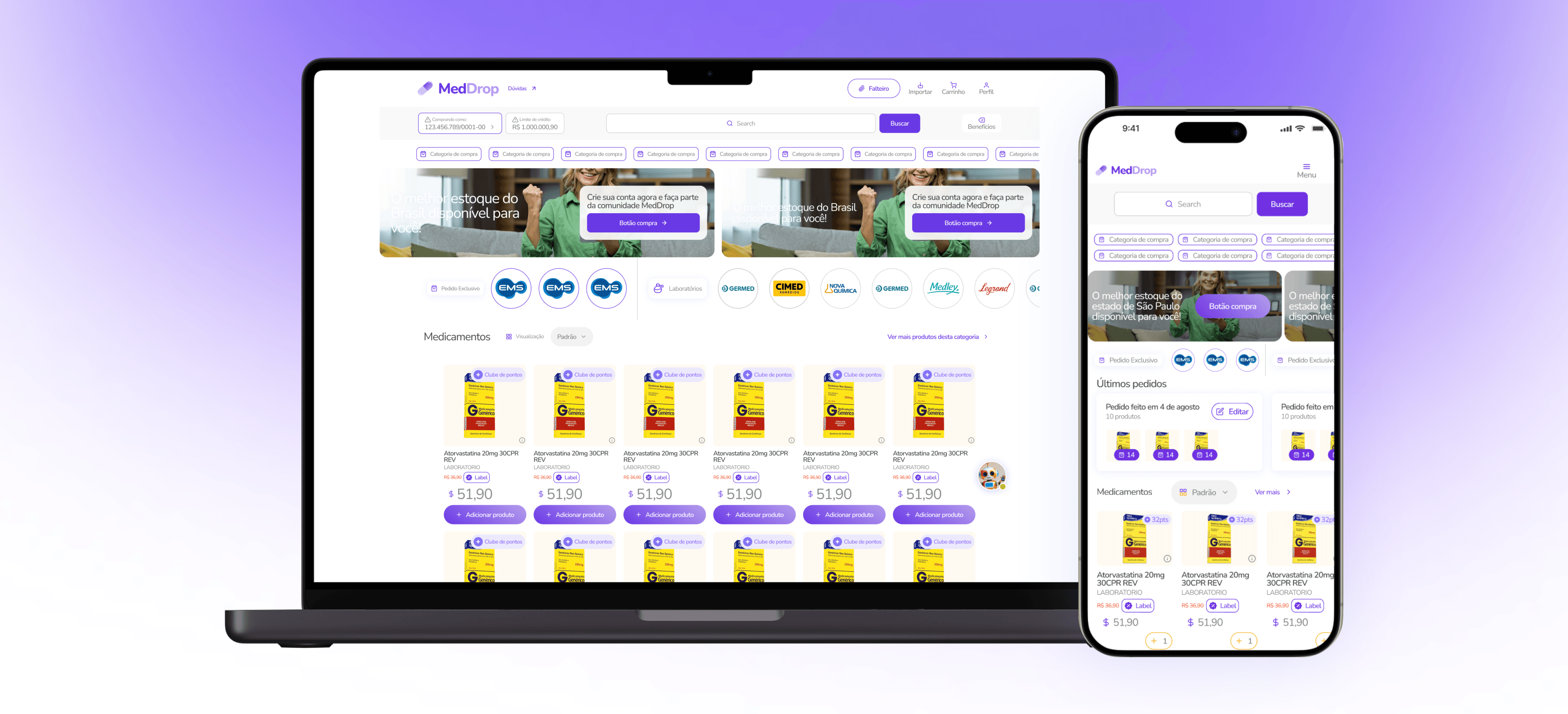
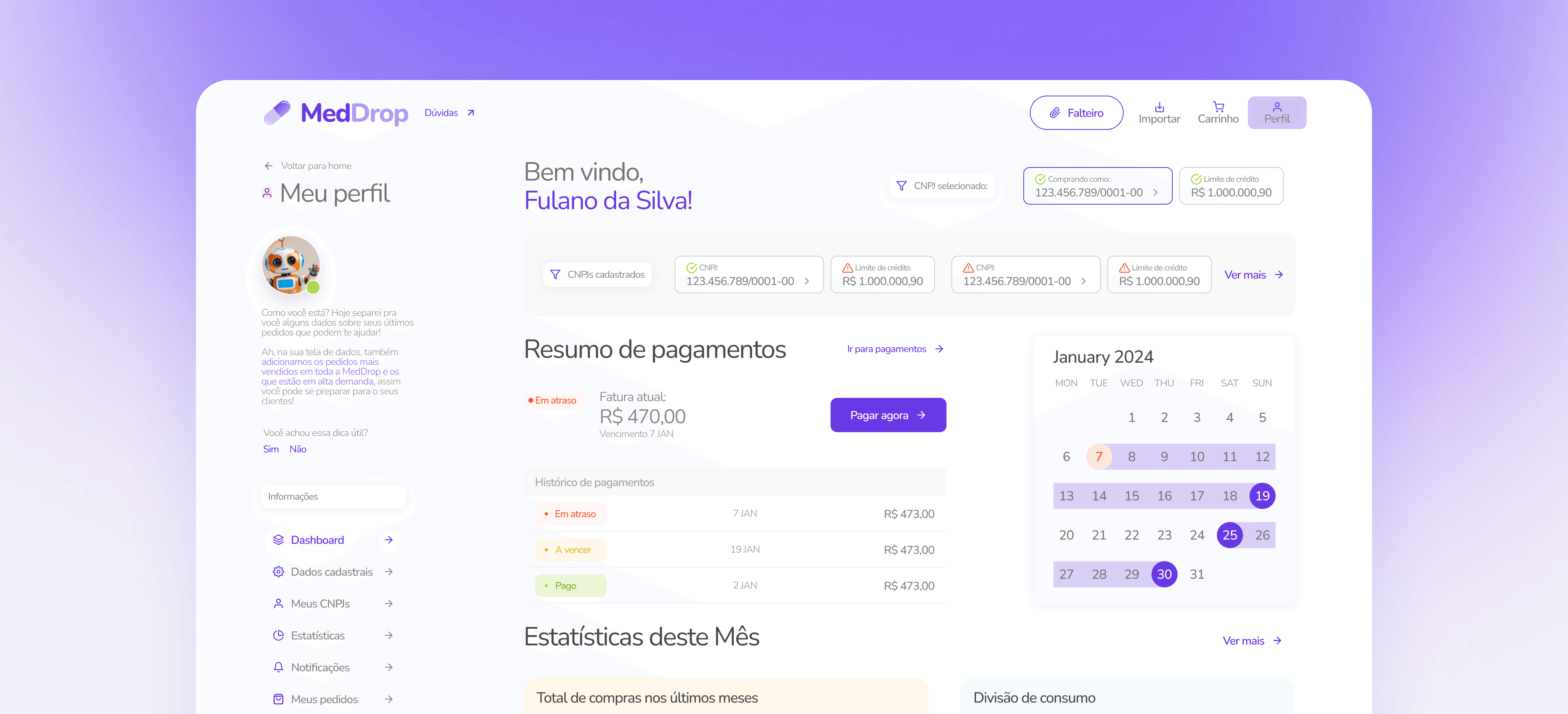
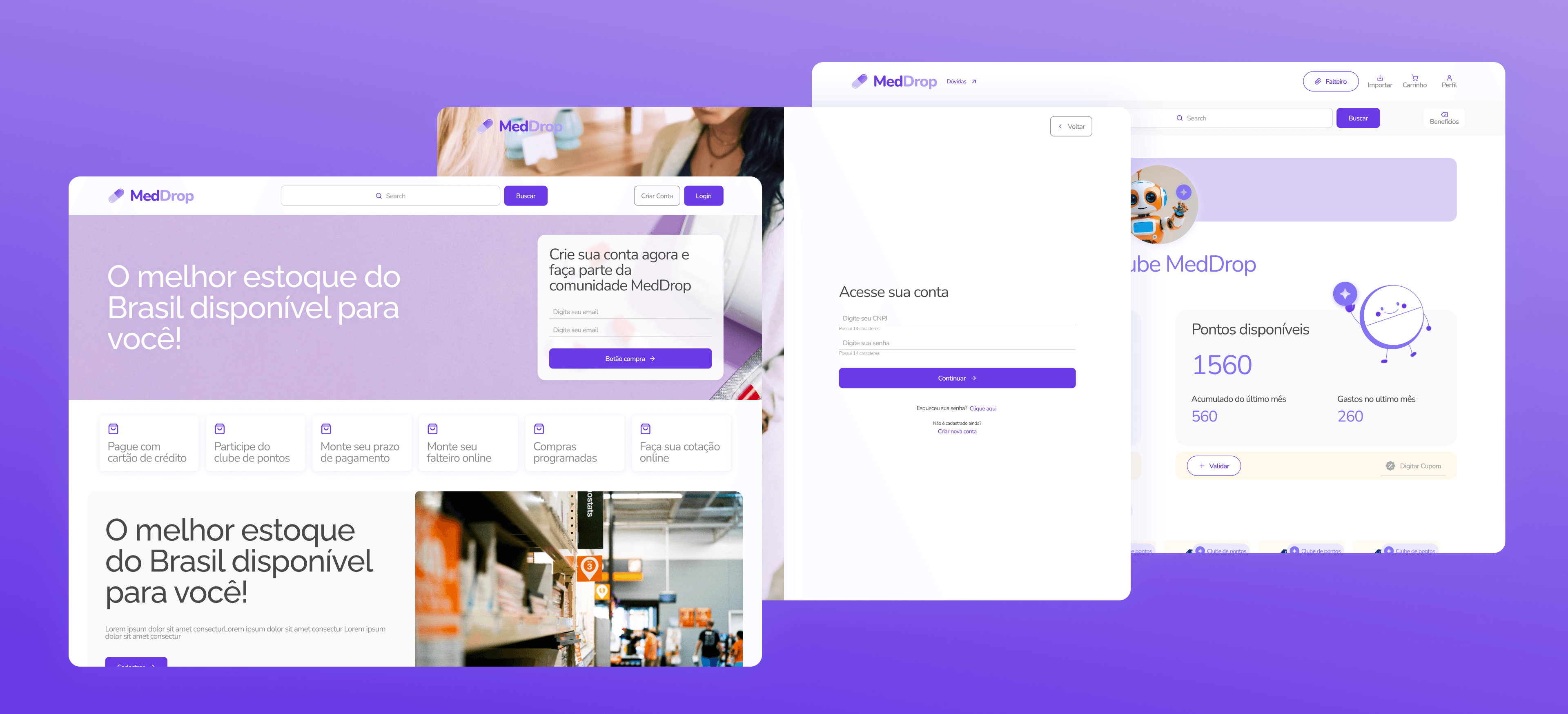
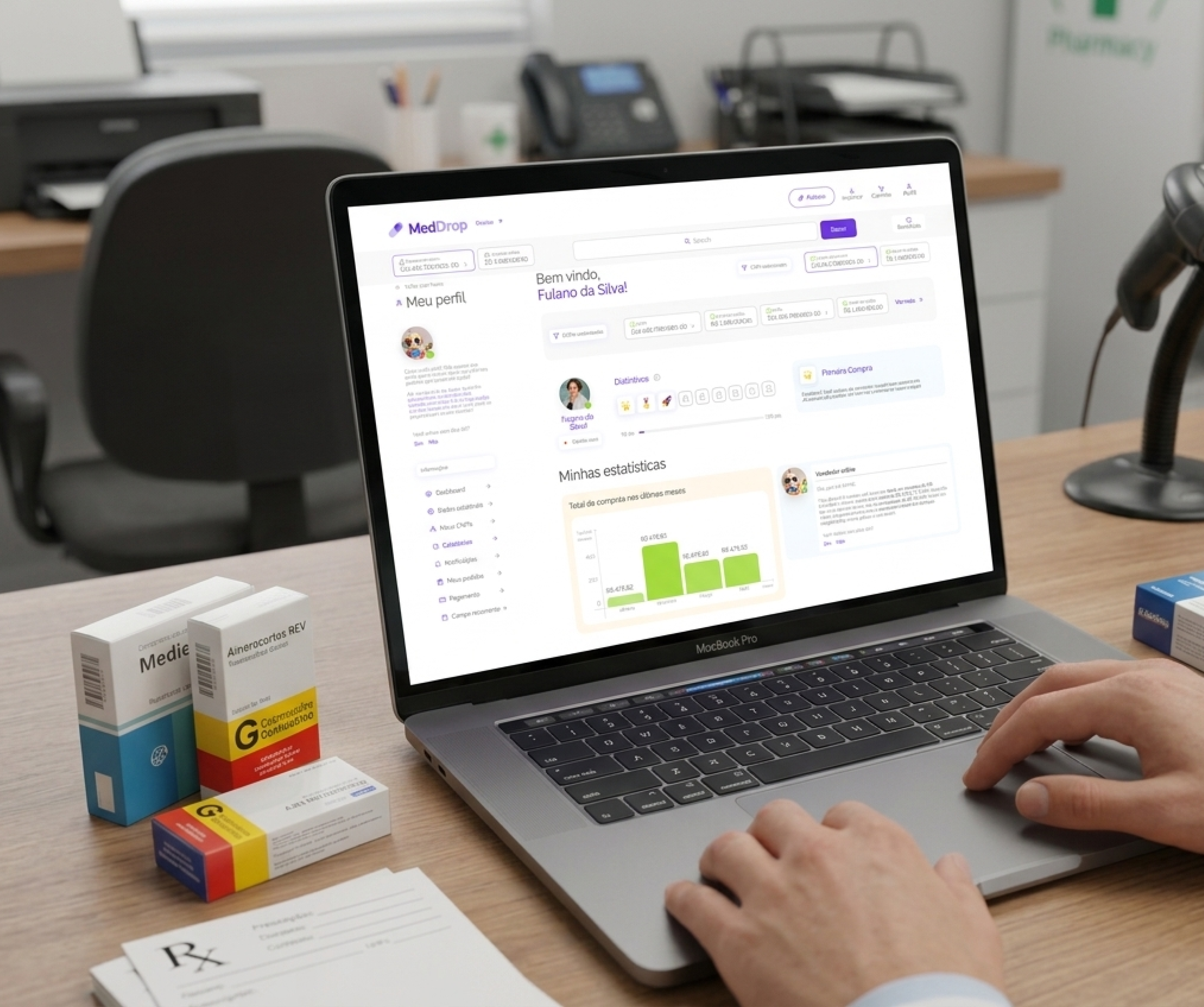
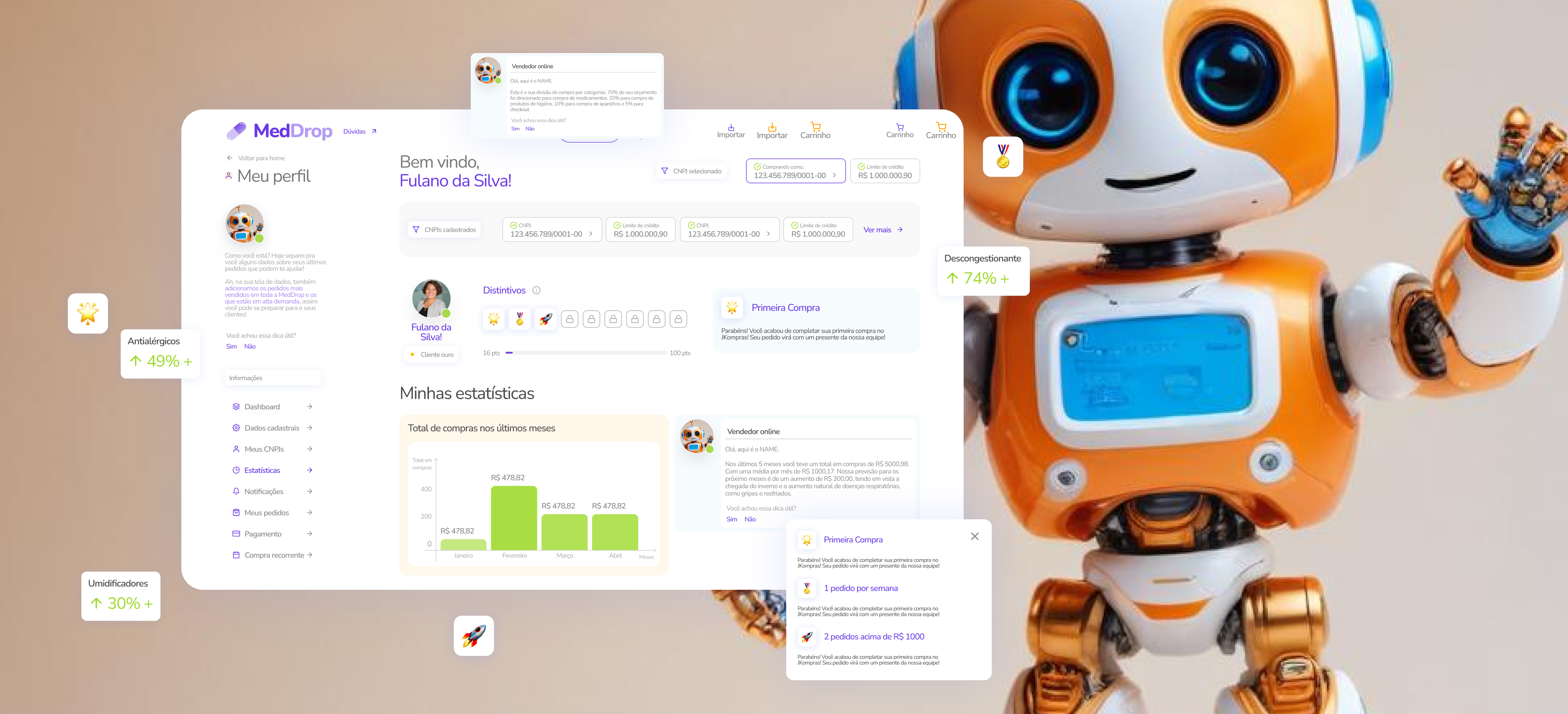
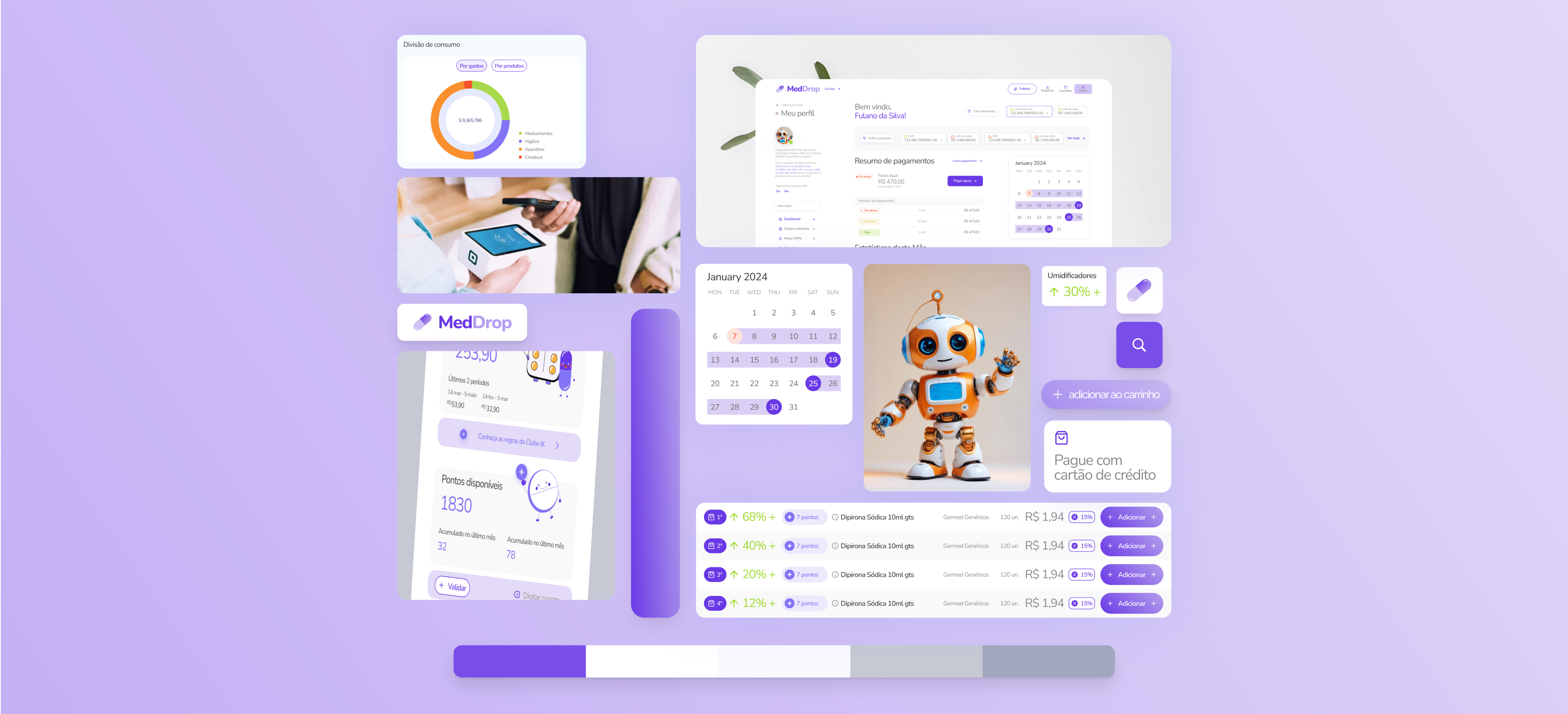
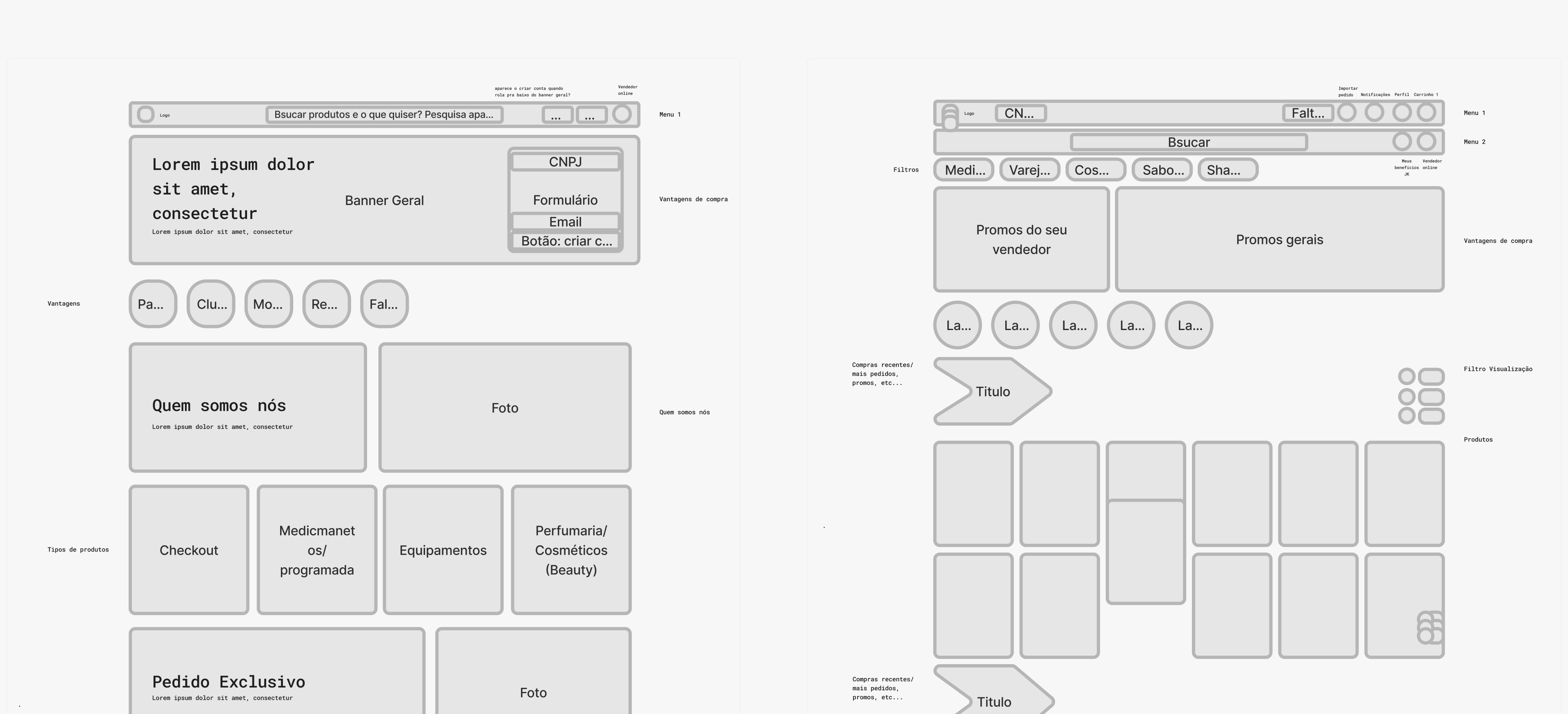
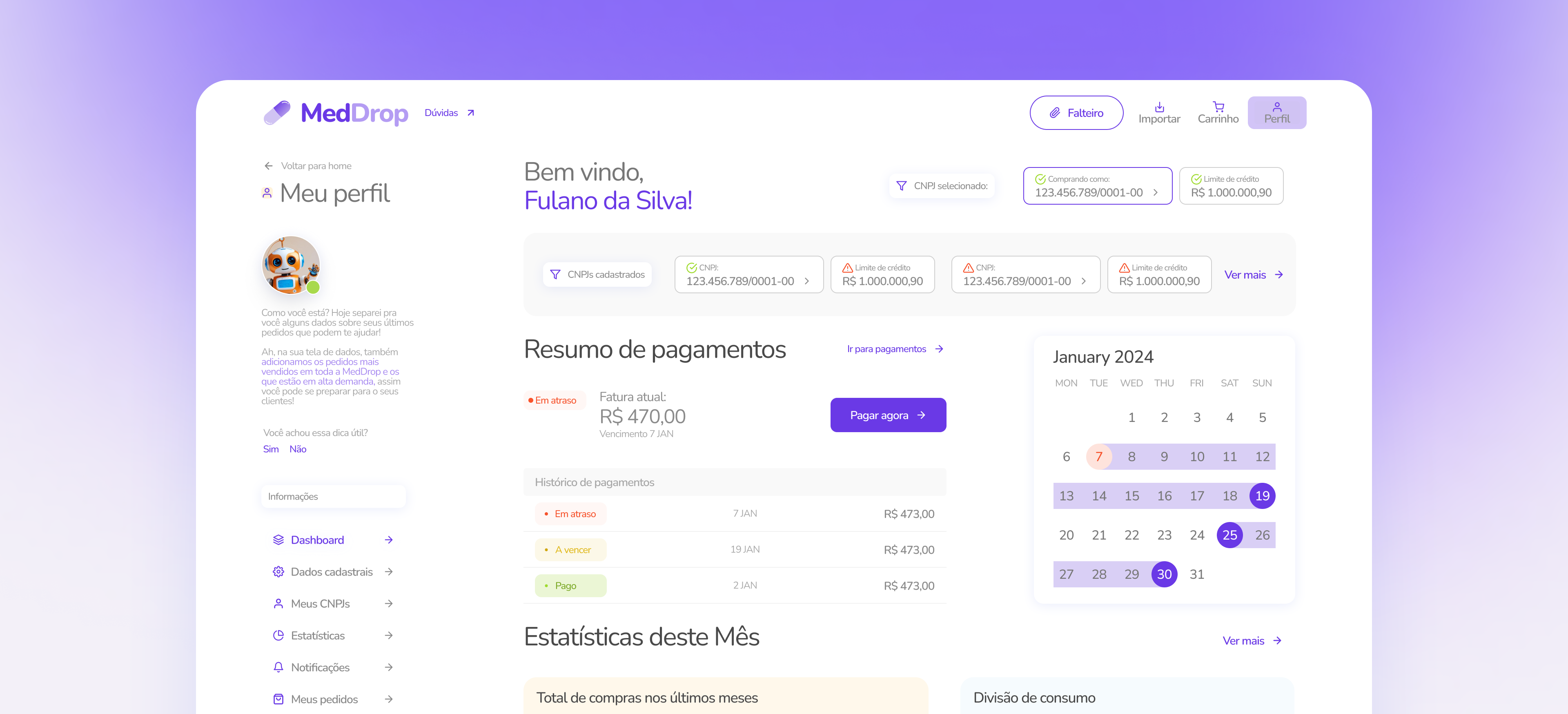
I translated research findings into four main areas: registration and access (restructured so pharmacies could begin using the platform with less external support); purchasing flow and system feedback (improving information hierarchy and clarifying statuses throughout ordering); pharmacy management (designing a User Profile with payment summaries, spending analytics, automated insights and account settings); and a new digital and human service model that repositioned sales representatives toward customer relationships and complex needs rather than routine orders. I collaborated with Julia Sprioli on the UX flows and design system throughout.
06 / 06 — Results
The project reframed MedDrop from an online ordering channel into a service platform designed around the broader purchasing and management needs of pharmacies. The proposed experience created clearer access and navigation, improved information hierarchy and gave users more visibility into their orders and financial activity. The research also helped the team understand where automation could increase autonomy and where human support remained essential — creating a stronger foundation for digital adoption, the repositioning of sales representatives and MedDrop's expansion into new markets.
01 / 06 — Overview
MedDrop
From ordering platform to service: balancing autonomy and human support in pharmacy supply
Client
MedDrop
Year
2024
Duration
5 months
Type
Product Design
Role
UX Research & UX/UI Design
Scope
UX Research · UX Design · UI Design · Design System
Team
Design · Research
Duration
5 months
02 / 06 — Context
MedDrop is a pharmaceutical distributor based in the interior of São Paulo, holding a market share of over 80% among small and medium-sized pharmacies. Despite this strong presence, only 17% of its customers used the digital purchasing platform. Looking to expand into new states and reposition its sales representatives toward market growth, MedDrop decided to redesign its online ordering system and transform it into a broader service for purchasing and managing pharmaceutical products. I joined the project to lead the UX research and collaborate on the product experience, investigating why pharmacies still depended heavily on sales representatives and how the platform could offer greater autonomy without losing the human relationships that supported the business.
03 / 06 — Challenge
The main challenge was transforming a transactional ordering platform into a service that could support the broader purchasing routine of pharmacies. Users needed clearer information, immediate feedback and greater control over their orders and financial activity. At the same time, MedDrop needed to reduce operational dependence on sales representatives without weakening the trusted relationships they had built with customers. The experience therefore had to balance automation and personal support while creating a scalable foundation for the company's expansion.
04 / 06 — Research
I led the research phase by mapping the existing purchasing workflow, conducting in-depth interviews with users and analyzing quantitative data from the platform. The research revealed friction throughout registration and ordering, limited system feedback and a strong dependence on sales representatives to complete routine tasks and resolve uncertainty. I also identified that pharmacies did not follow a single purchasing pattern — their needs and behaviors changed according to order value, purchasing frequency and their relationship with MedDrop. This showed that increasing digital adoption was not simply a matter of moving more activities online. The product needed to provide clarity and autonomy while preserving human support in the moments where it still created value.
05 / 06 — Solution
I translated research findings into four main areas: registration and access (restructured so pharmacies could begin using the platform with less external support); purchasing flow and system feedback (improving information hierarchy and clarifying statuses throughout ordering); pharmacy management (designing a User Profile with payment summaries, spending analytics, automated insights and account settings); and a new digital and human service model that repositioned sales representatives toward customer relationships and complex needs rather than routine orders. I collaborated with Julia Sprioli on the UX flows and design system throughout.
06 / 06 — Results
The project reframed MedDrop from an online ordering channel into a service platform designed around the broader purchasing and management needs of pharmacies. The proposed experience created clearer access and navigation, improved information hierarchy and gave users more visibility into their orders and financial activity. The research also helped the team understand where automation could increase autonomy and where human support remained essential — creating a stronger foundation for digital adoption, the repositioning of sales representatives and MedDrop's expansion into new markets.