01 / 06 — Overview
Semiologia Diária
From fragmented study materials to a daily learning system: designing AI-assisted medical learning
Client
Solo project
Year
2026
Duration
Ongoing
Type
Product Design
Role
Solo Product Designer & AI Builder
Scope
Product Design · Product Management · AI Development
Team
Solo project
Duration
Ongoing
02 / 06 — Context
Medical students at the University of Buenos Aires spend the final two years of their degree in the UDH phase, attending practical hospital classes every day while studying new clinical content each night. Semiology requires students to navigate a large volume of concepts, clinical signs, examination techniques and diagnostic reasoning across different study materials. With limited time and energy, they needed a more realistic way to organize, understand and retain the content required for their daily hospital practice. I created Semiologia Diária as a solo project, leading the entire process from problem definition and product strategy to UX design, development and deployment.
03 / 06 — Challenge
The main challenge was transforming a large and fragmented volume of semiology content into a study experience that could fit into the daily routine of hospital-based students. The product needed to reduce the effort required to find, organize and review relevant information without oversimplifying the subject. It also needed to support clinical reasoning, active recall and oral practice, reflecting the way students are evaluated at the UBA rather than offering only passive summaries.
04 / 06 — Research
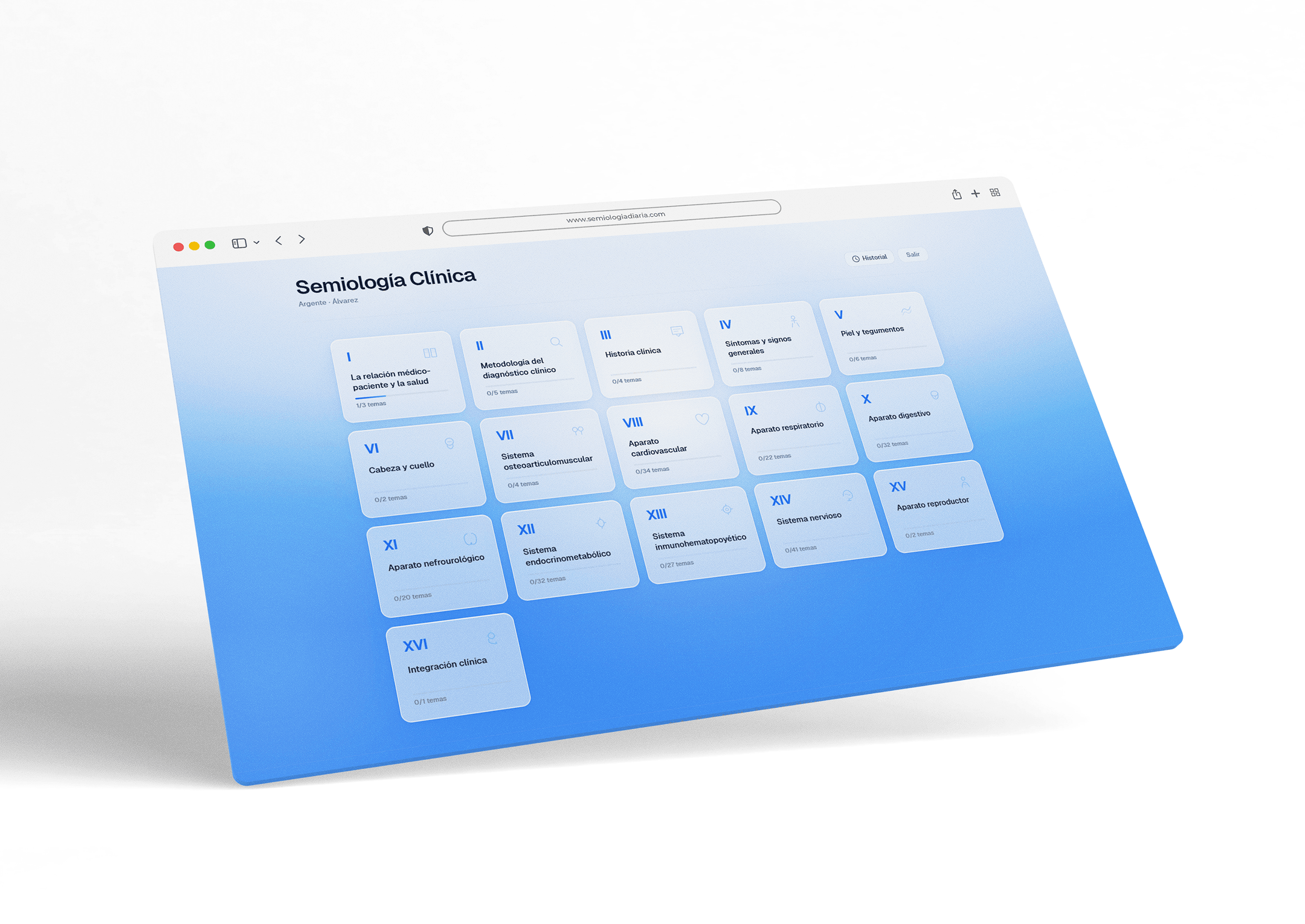
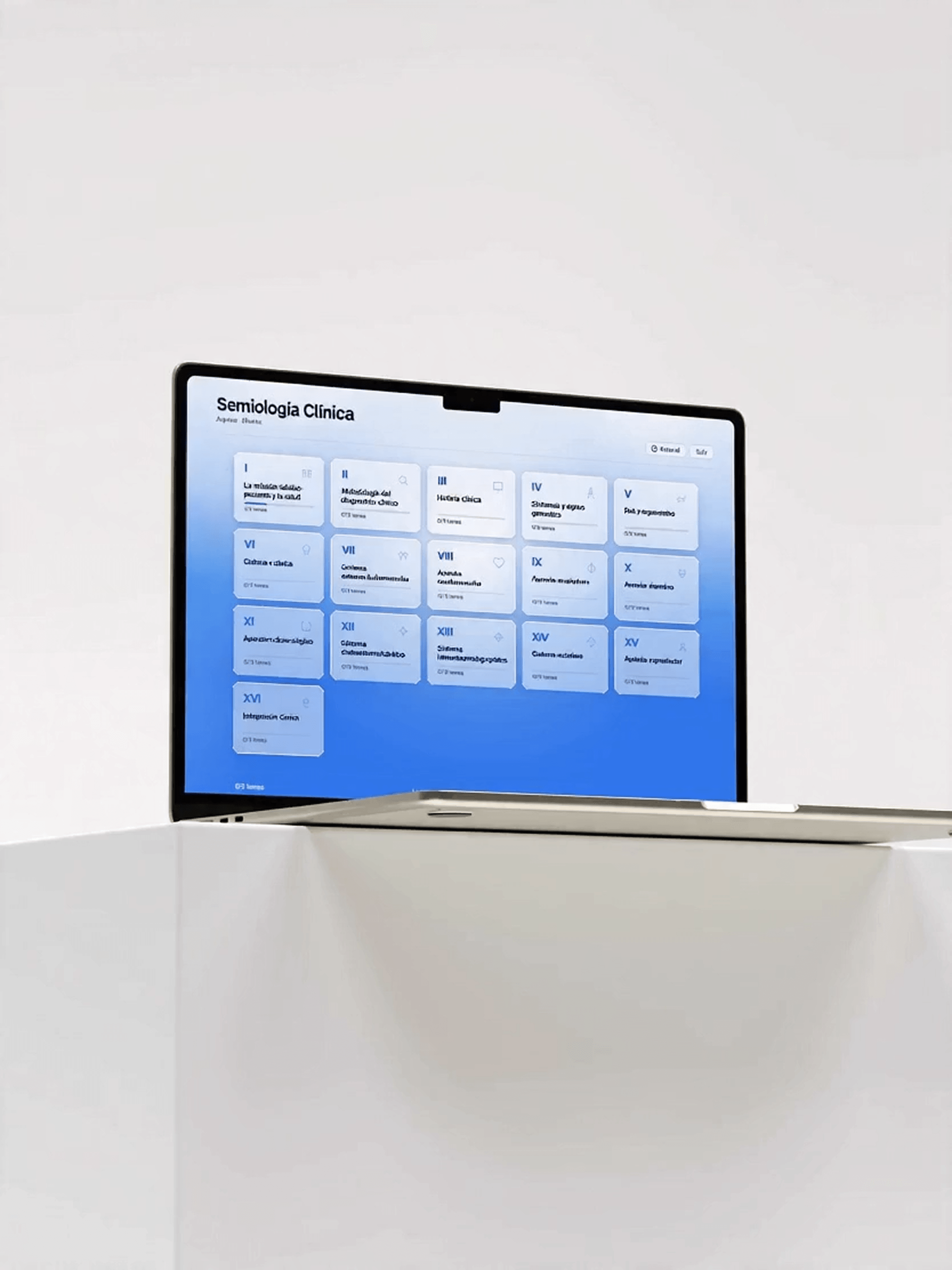
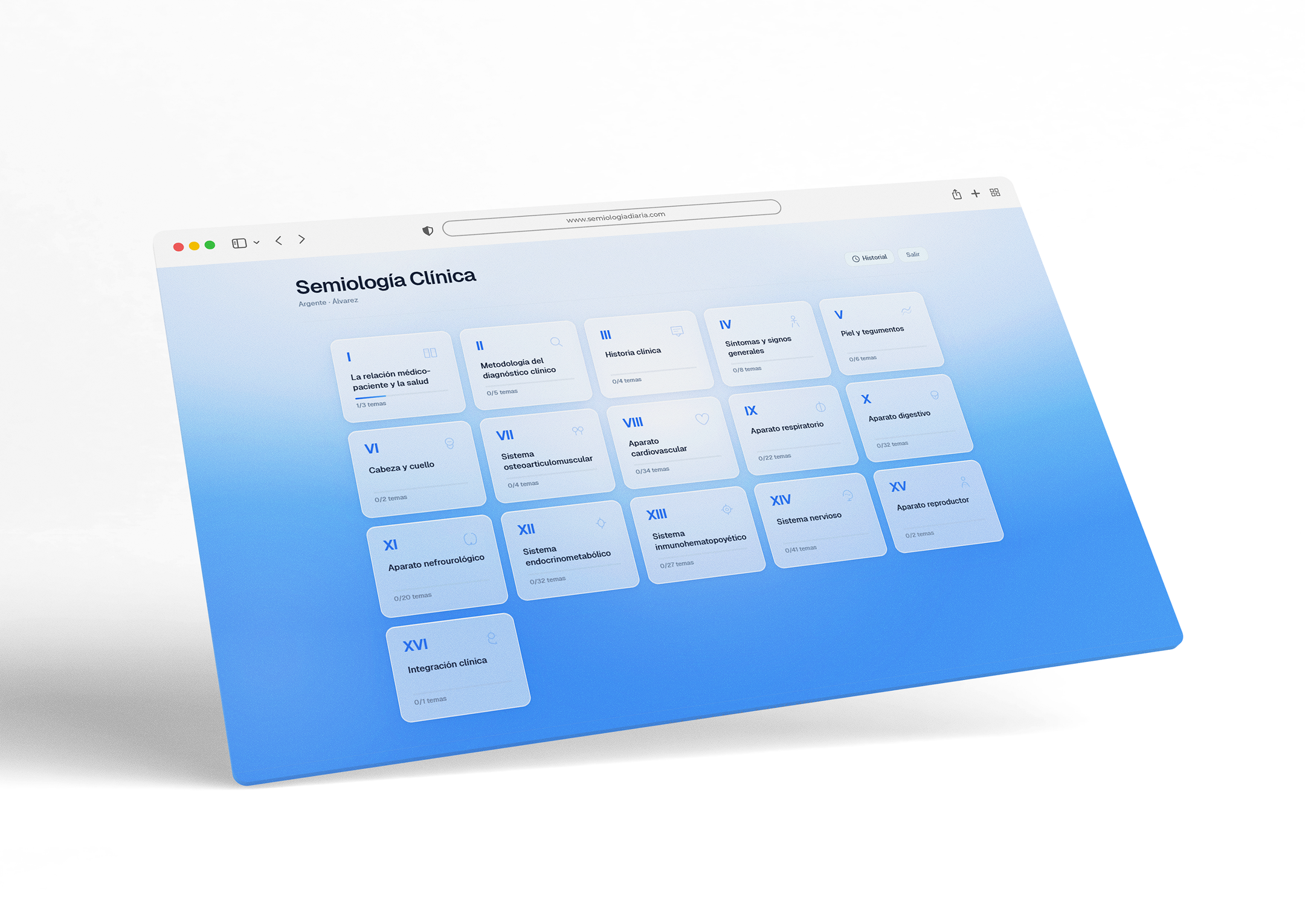
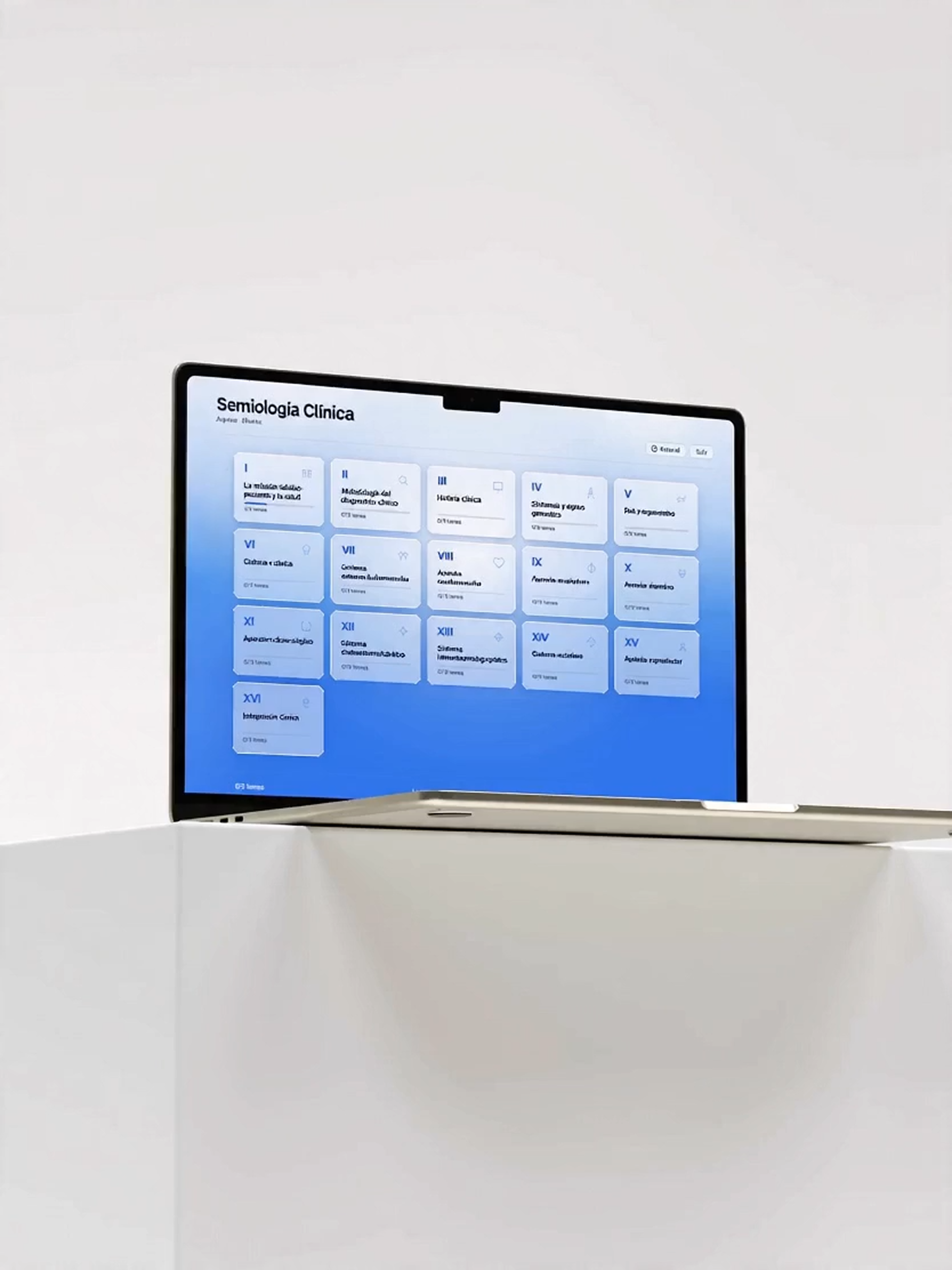
I developed the content structure from different semiology study sources and organized it around the topics and areas students encounter throughout the UDH curriculum. The initial concept was a search-based experience where students could enter a topic and retrieve the most relevant study content. During development, I realized this approach created an inconsistent experience and made it harder to maintain a clear learning path. Instead of forcing the original solution, I redesigned the product around a structured navigation dashboard. Students could browse semiology content by areas, sections and topics, creating a more predictable study flow aligned with their academic routine. This pivot made the experience more aligned with the users' mental model and created a more technically reliable foundation for the product.
05 / 06 — Solution
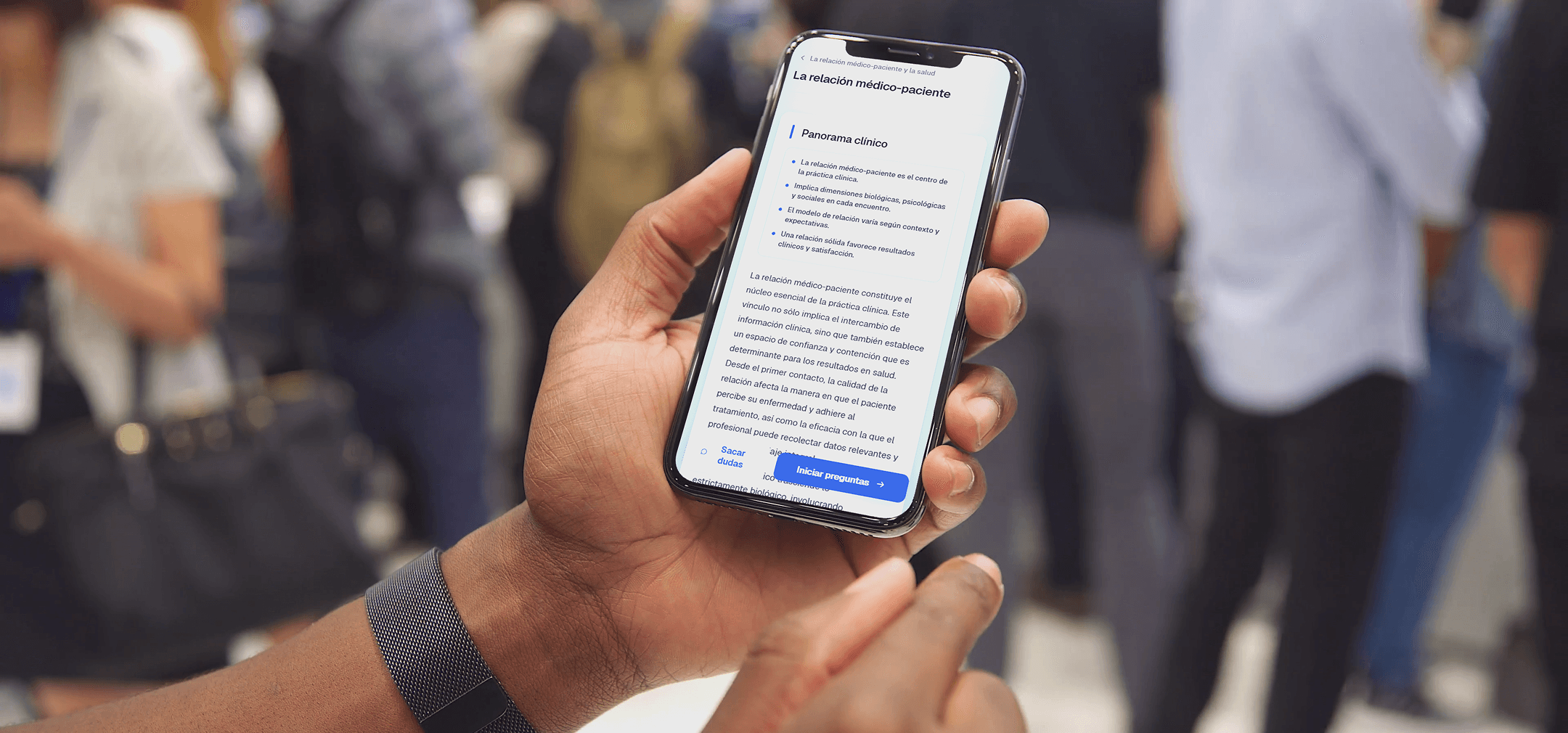
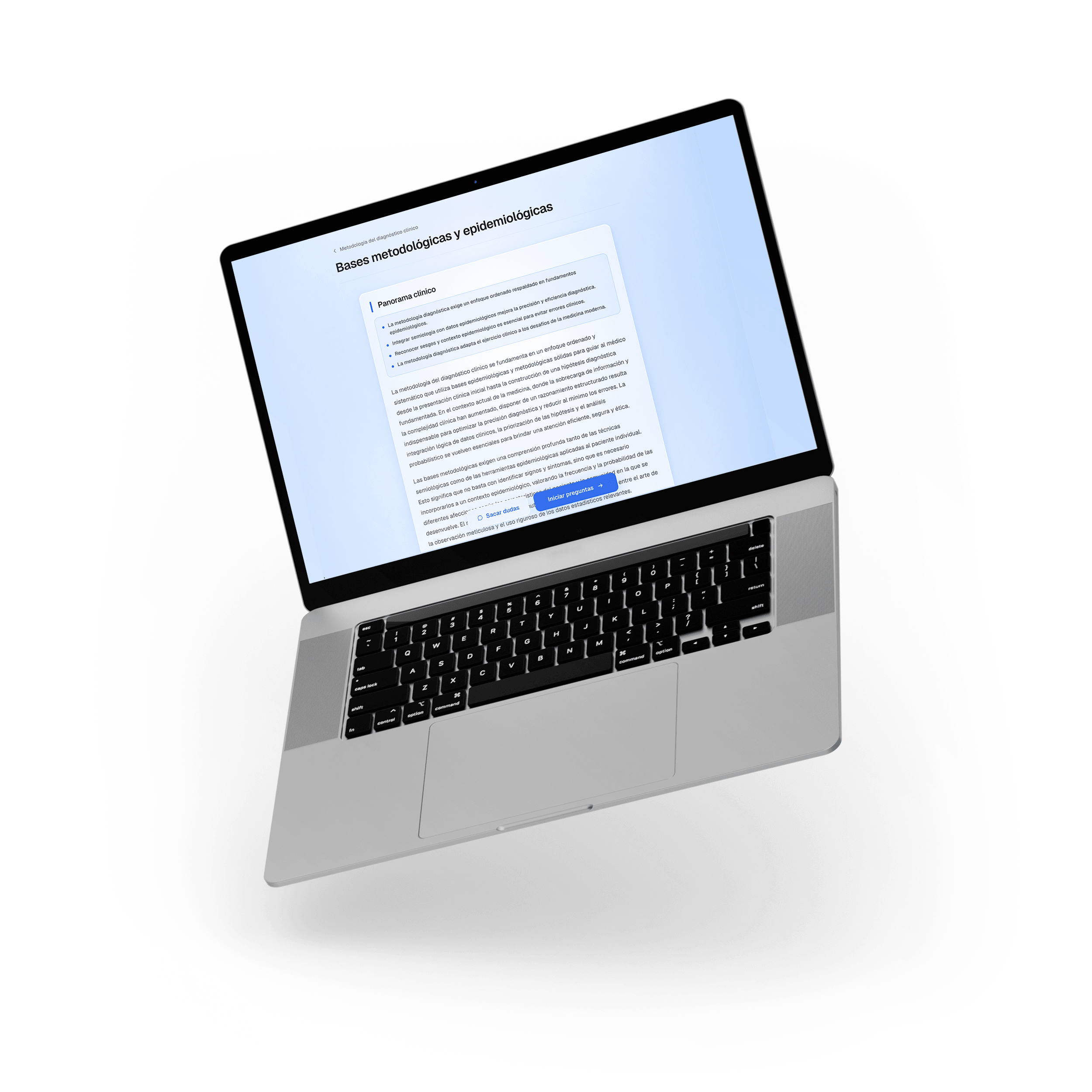
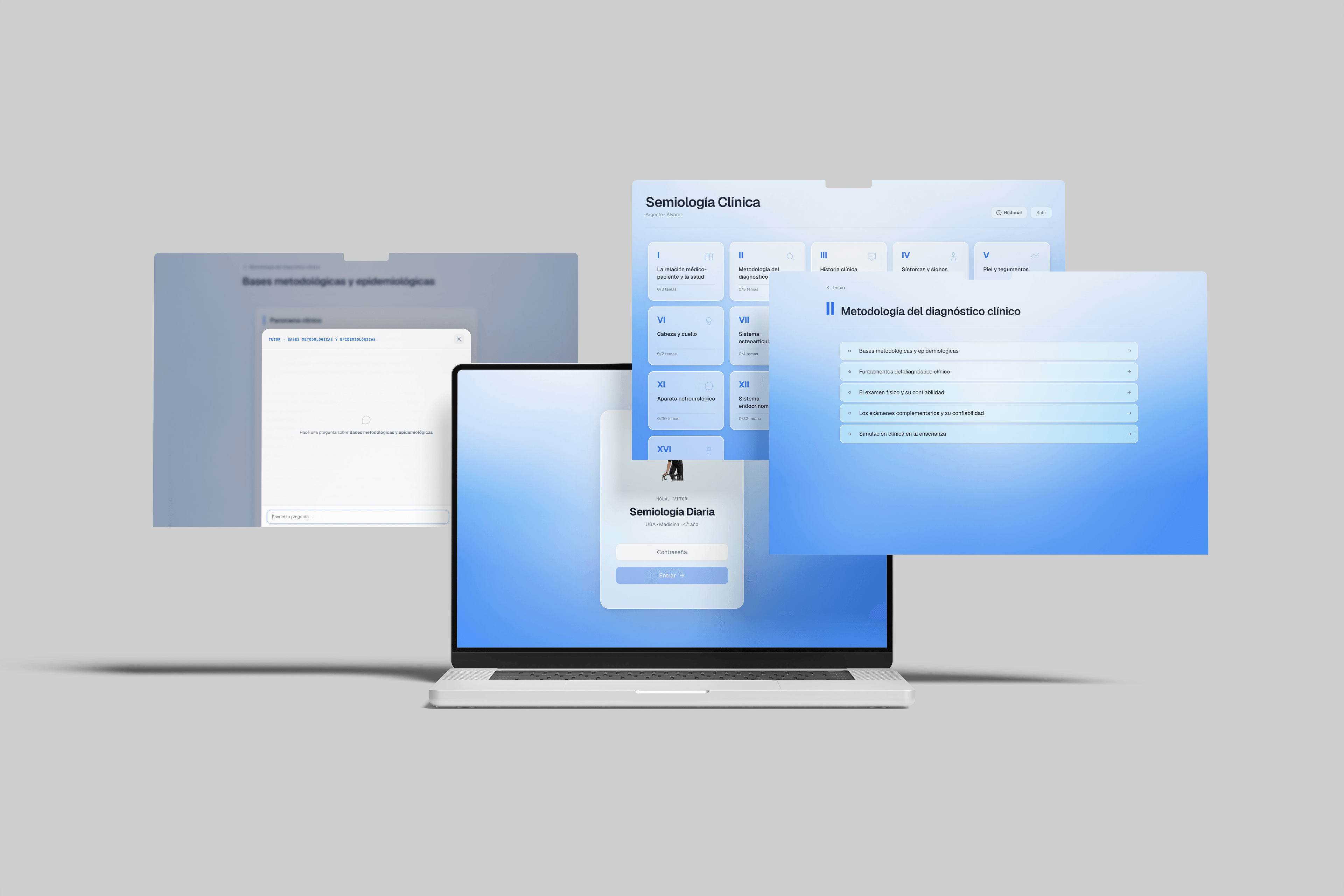
I structured the experience across five main areas: curriculum-based navigation (students explore semiology content through areas, sections and topics organized around their learning journey during the UDH phase); AI-generated study summaries (covering concept, pathophysiology, clinical findings, semiological examination and pathognomonic signs); clinical practice (AI-generated questions reinforcing reasoning over memorization); oral exam simulation (students answer through text or voice, reproducing the oral evaluation format); and personal notes and review. Throughout the project, I defined the information architecture, user flows, feature priorities, interface and product rules. I also managed the implementation through iterative development with Claude Code, using real usage feedback to guide product decisions.
06 / 06 — Results
Semiologia Diária is a functional product in production, validated with a selected group of medical students from the UBA. The project transformed a complex and fragmented study process into a structured and interactive experience designed around the actual routine of medical students. It also demonstrated my ability to move independently from identifying a real problem to defining, designing, building and deploying a usable product. Rather than using AI as a shortcut, I used it as an execution layer that allowed me to test and deliver the product while maintaining control over the experience and product decisions.
01 / 06 — Overview
Semiologia Diária
From fragmented study materials to a daily learning system: designing AI-assisted medical learning
Client
Solo project
Year
2026
Duration
Ongoing
Type
Product Design
Role
Solo Product Designer & AI Builder
Scope
Product Design · Product Management · AI Development
Team
Solo project
Duration
Ongoing
02 / 06 — Context
Medical students at the University of Buenos Aires spend the final two years of their degree in the UDH phase, attending practical hospital classes every day while studying new clinical content each night. Semiology requires students to navigate a large volume of concepts, clinical signs, examination techniques and diagnostic reasoning across different study materials. With limited time and energy, they needed a more realistic way to organize, understand and retain the content required for their daily hospital practice. I created Semiologia Diária as a solo project, leading the entire process from problem definition and product strategy to UX design, development and deployment.
03 / 06 — Challenge
The main challenge was transforming a large and fragmented volume of semiology content into a study experience that could fit into the daily routine of hospital-based students. The product needed to reduce the effort required to find, organize and review relevant information without oversimplifying the subject. It also needed to support clinical reasoning, active recall and oral practice, reflecting the way students are evaluated at the UBA rather than offering only passive summaries.
04 / 06 — Research
I developed the content structure from different semiology study sources and organized it around the topics and areas students encounter throughout the UDH curriculum. The initial concept was a search-based experience where students could enter a topic and retrieve the most relevant study content. During development, I realized this approach created an inconsistent experience and made it harder to maintain a clear learning path. Instead of forcing the original solution, I redesigned the product around a structured navigation dashboard. Students could browse semiology content by areas, sections and topics, creating a more predictable study flow aligned with their academic routine. This pivot made the experience more aligned with the users' mental model and created a more technically reliable foundation for the product.
05 / 06 — Solution
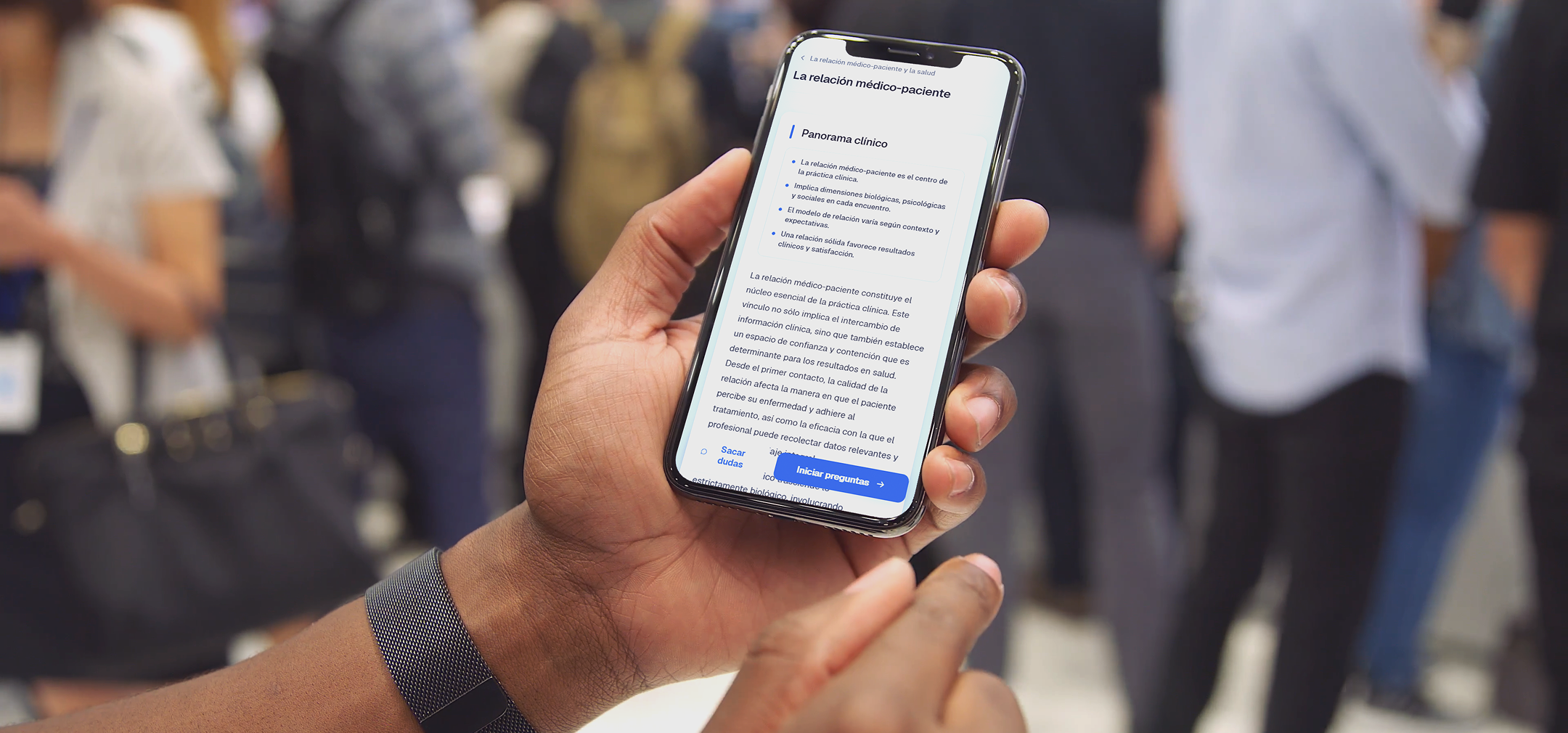
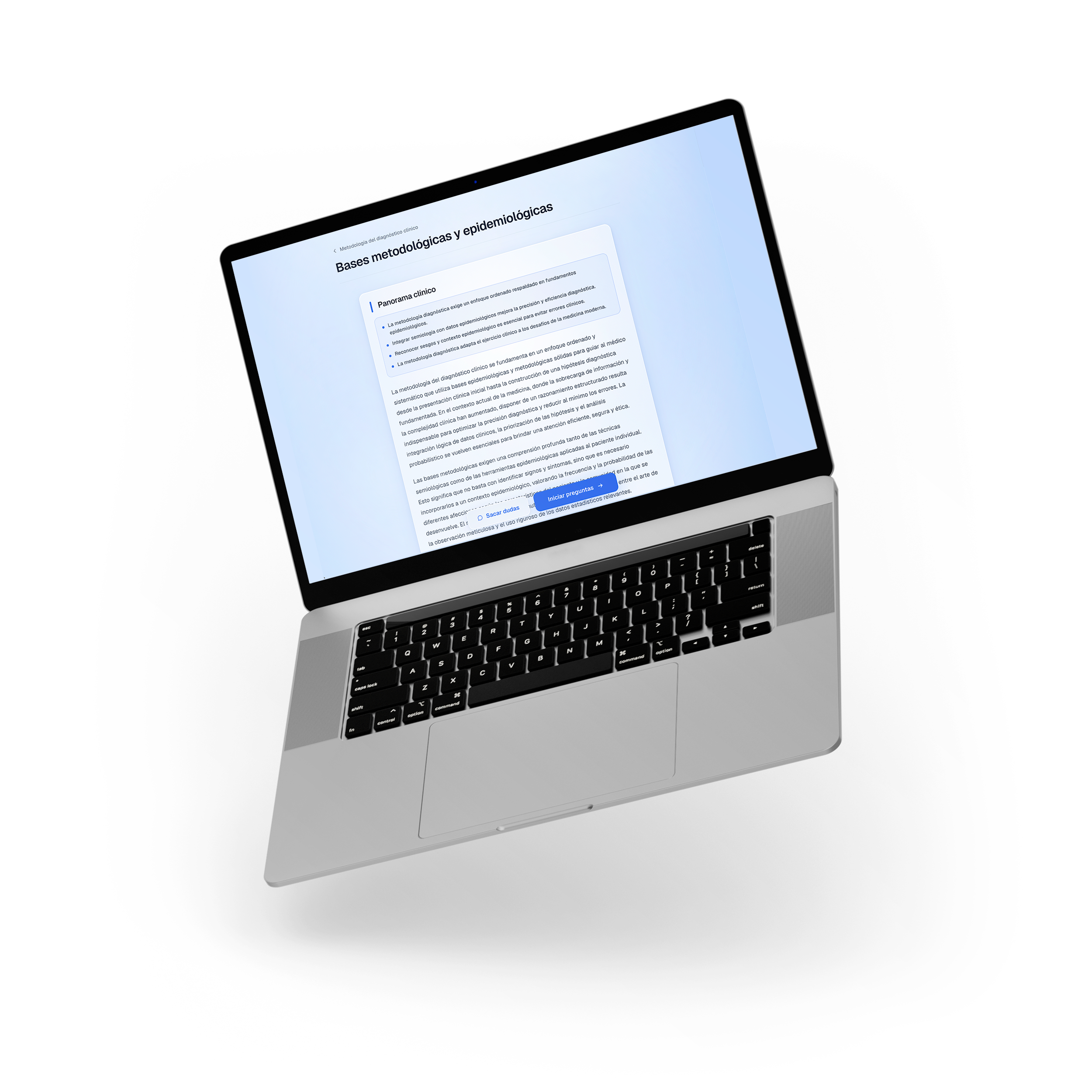
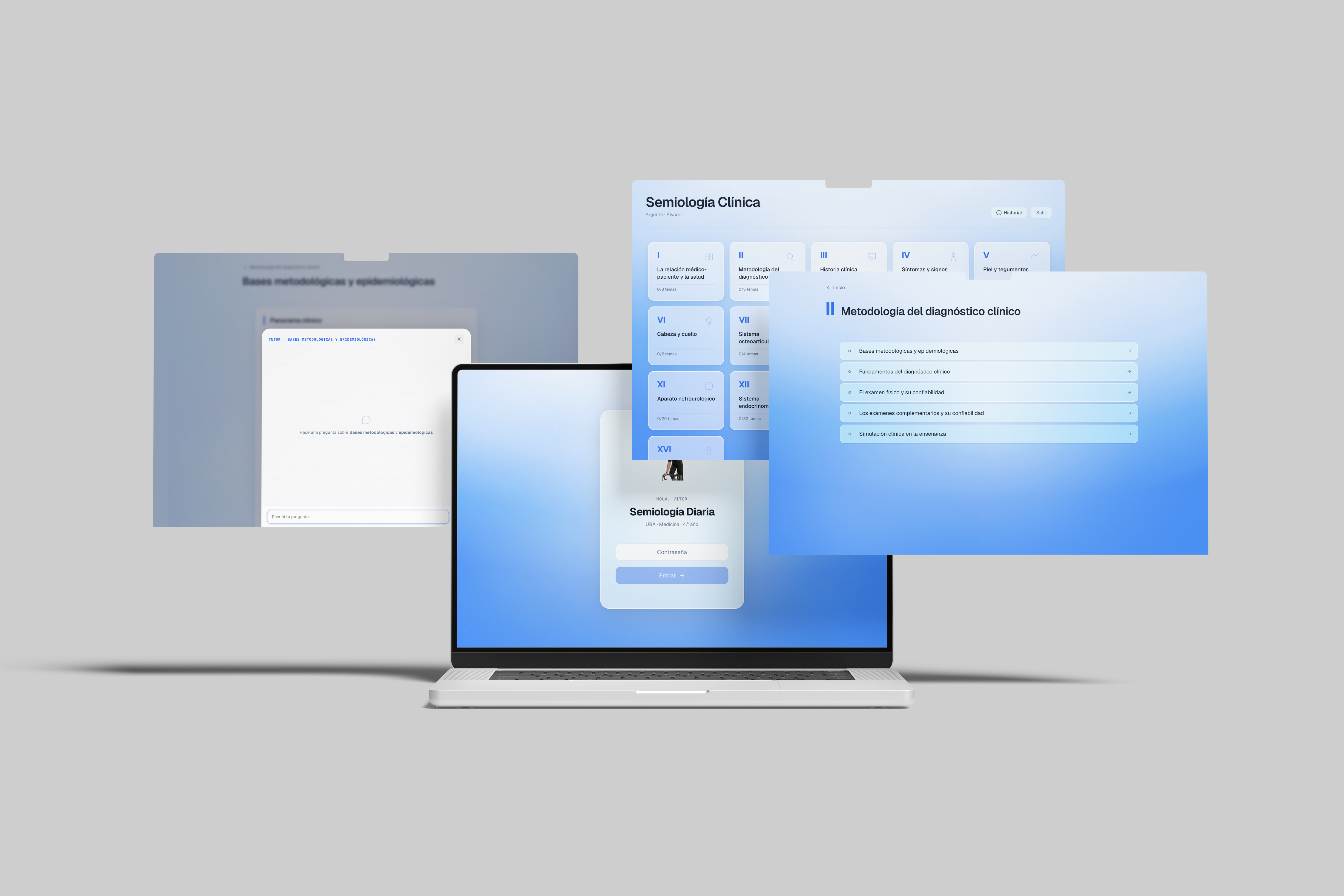
I structured the experience across five main areas: curriculum-based navigation (students explore semiology content through areas, sections and topics organized around their learning journey during the UDH phase); AI-generated study summaries (covering concept, pathophysiology, clinical findings, semiological examination and pathognomonic signs); clinical practice (AI-generated questions reinforcing reasoning over memorization); oral exam simulation (students answer through text or voice, reproducing the oral evaluation format); and personal notes and review. Throughout the project, I defined the information architecture, user flows, feature priorities, interface and product rules. I also managed the implementation through iterative development with Claude Code, using real usage feedback to guide product decisions.
06 / 06 — Results
Semiologia Diária is a functional product in production, validated with a selected group of medical students from the UBA. The project transformed a complex and fragmented study process into a structured and interactive experience designed around the actual routine of medical students. It also demonstrated my ability to move independently from identifying a real problem to defining, designing, building and deploying a usable product. Rather than using AI as a shortcut, I used it as an execution layer that allowed me to test and deliver the product while maintaining control over the experience and product decisions.